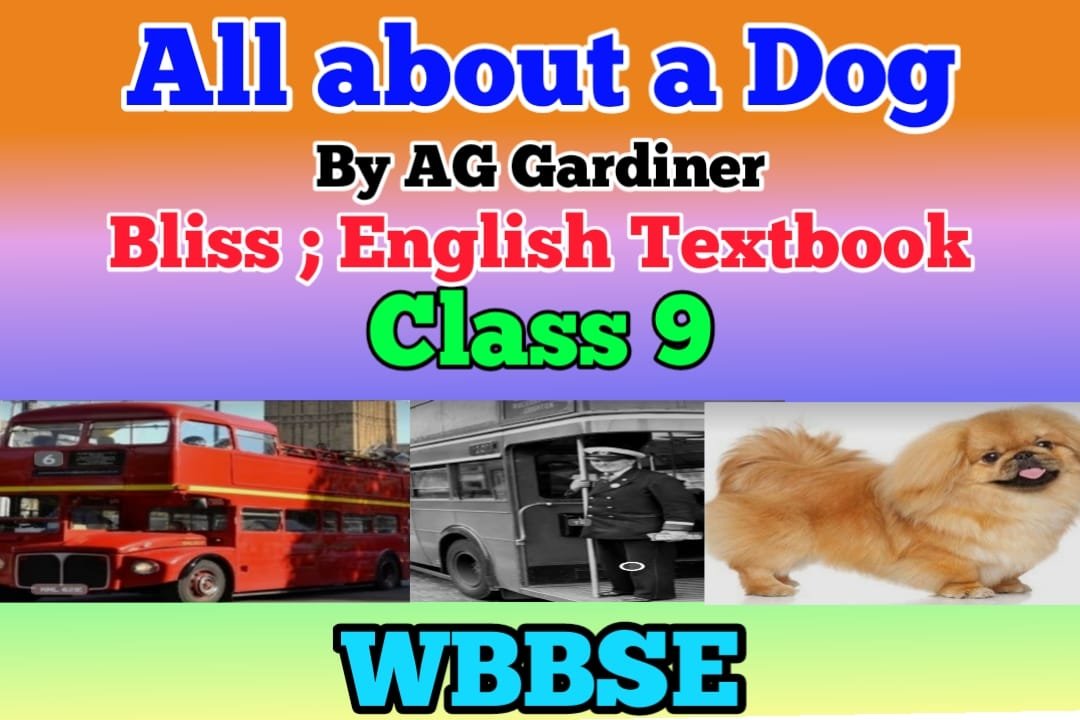
All about a Dog Solution for Class 9 has been arranged to assist all Class 9 students of WBBSE easily and effectively. The Solution All about a Dog Solution of class 9 is under the syllabus of WBBSE and has been provided in the following. This page of All about a Dog Class 9 solution of WBBSE contains all Exercise answers, word notes, Bengali meanings, and added extra different types of questions.
About the author:
Alfred George Gardiner (1865–1946) was a British journalist and author.
উচ্চারণ: আলফ্রেড জর্জ গার্ডিনার (এইটিন সিক্সটি ফাইভ–নাইনটিন ফরটি সিক্স) ওয়াজ এ ব্রিটিশ জার্নালিস্ট অ্যান্ড অথর।
অর্থ: আলফ্রেড জর্জ গার্ডিনার (১৮৬৫–১৯৪৬) ছিলেন একজন ব্রিটিশ সাংবাদিক ও লেখক।
His essays, written under the pen-name, Alpha of the Plough, are highly regarded .
উচ্চারণ: হিজ এসে’স, রিটেন আন্ডার দ্য পেন-নেম, আলফা অফ দ্য প্লাউ, আর হাইলি রিগার্ডেড।
অর্থ: ‘Alpha of the Plough’ ছদ্মনামে লেখা তাঁর প্রবন্ধগুলি অত্যন্ত সমাদৃত।
His uniqueness lay in his ability to teach the basic truths of life in an easy and amusing manner.
উচ্চারণ: হিজ ইউনিকনেস লে ইন হিজ অ্যাবিলিটি টু টিচ দ্য বেসিক ট্রুথস অফ লাইফ ইন অ্যান ইজি অ্যান্ড অ্যামিউজিং ম্যানার।
অর্থ: জীবনের মৌলিক সত্যগুলো সহজ ও আনন্দদায়ক ভঙ্গিতে শেখানোর ক্ষমতার মধ্যেই তাঁর স্বকীয়তা নিহিত ছিল।
The Pillars of Society, Pebbles on the Shore, Many Furrows and Leaves in the Wind are some of his well known writings.
উচ্চারণ: দ্য পিলারস অফ সোসাইটি, পেবলস অন দ্য শোর, মেনি ফারোজ অ্যান্ড লিভস ইন দ্য উইন্ড আর সাম অফ হিজ ওয়েল নোন রাইটিংস।
অর্থ: The Pillars of Society, Pebbles on the Shore, Many Furrows এবং Leaves in the Wind তাঁর কিছু সুপরিচিত রচনা।
About the text:
In this text, which is an edited version of Gardiner’s essay of the same name, the author observes how a bus conductor makes a lady go up to the uncovered top of a double-decker bus on a freezing evening just because she is carrying a dog.
উচ্চারণ: ইন দিস টেক্সট, হুইচ ইজ অ্যান এডিটেড ভার্সন অফ গার্ডিনার’স এসে অফ দ্য সেম নেম, দ্য অথর অবজার্ভস হাউ এ বাস কন্ডাক্টর মেইক্স এ লেডি গো আপ টু দ্য আনকভার্ড টপ অফ এ ডাবল-ডেকার বাস অন এ ফ্রিজিং ইভনিং জাস্ট বিকজ শি ইজ ক্যারিং এ ডগ।
অর্থ: এই পাঠটি, যা গার্ডিনারের একই নামের প্রবন্ধের সম্পাদিত রূপ, সেখানে লেখক লক্ষ্য করেন—একজন বাস কন্ডাক্টর কীভাবে কেবল একটি কুকুর সঙ্গে থাকার কারণে এক শীতল সন্ধ্যায় একজন মহিলাকে ডাবল-ডেকার বাসের খোলা ছাদে উঠতে বাধ্য করে।
While watching the incident and its reaction among other passengers, the author wonders whether rules should be tempered with goodwill in order to make them more humane.
উচ্চারণ: হোয়াইল ওয়াচিং দ্য ইনসিডেন্ট অ্যান্ড ইটস রিঅ্যাকশন অ্যামং আদার প্যাসেঞ্জারস, দ্য অথর ওয়ান্ডার্স হোয়েদার রুলস শুড বি টেম্পার্ড উইথ গুডউইল ইন অর্ডার টু মেইক দেম মোর হিউমেন।
অর্থ: ঘটনাটি এবং অন্যান্য যাত্রীদের প্রতিক্রিয়া লক্ষ্য করতে করতে লেখক ভাবেন—নিয়মগুলোকে আরও মানবিক করতে কি সেগুলোর সঙ্গে সদিচ্ছা মিশিয়ে প্রয়োগ করা উচিত নয়?

Text
Para 1
I was travelling in a bus.
উচ্চারণ: আই ওয়াজ ট্র্যাভেলিং ইন এ বাস।
অর্থ: আমি একটি বাসে ভ্রমণ করছিলাম।
It was a bitterly cold night, and even at the far end of the bus the east wind cut like a knife.
উচ্চারণ: ইট ওয়াজ এ বিটারলি কোল্ড নাইট, অ্যান্ড ইভেন অ্যাট দ্য ফার এন্ড অফ দ্য বাস দ্য ইস্ট উইন্ড কাট লাইক এ নাইফ।
অর্থ: রাতটা ছিল ভীষণ ঠান্ডা, আর বাসের একেবারে শেষ প্রান্তেও পুবের হাওয়া ছুরির মতো কেটে যাচ্ছিল।
The bus stopped and two women and a man got in together and filled the vacant places.
উচ্চারণ: দ্য বাস স্টপড অ্যান্ড টু উইমেন অ্যান্ড এ ম্যান গট ইন টুগেদার অ্যান্ড ফিলড দ্য ভ্যাক্যান্ট প্লেসেস।
অর্থ: বাসটি থামল এবং দু’জন মহিলা ও একজন পুরুষ একসঙ্গে উঠে ফাঁকা আসনগুলো ভরে দিল।
The younger woman carried a little Pekinese dog.
উচ্চারণ: দ্য ইয়াংগার উইম্যান ক্যারিড এ লিটল পেকিনিজ ডগ।
অর্থ: কমবয়সি মহিলাটির কোলে ছিল একটি ছোট পেকিনিজ কুকুর।
The conductor came in and took their fares.
উচ্চারণ: দ্য কন্ডাক্টর কেম ইন অ্যান্ড টুক দেয়ার ফেয়ার্স।
অর্থ: কন্ডাক্টর এসে তাদের ভাড়া নিলেন।
Then his eye rested on the beady-eyed dog.
উচ্চারণ: দেন হিজ আই রেস্টেড অন দ্য বিডি-আইড ডগ।
অর্থ: তারপর তার চোখ গিয়ে পড়ল ছোট ছোট চোখওয়ালা কুকুরটির ওপর।
I saw trouble coming up.
উচ্চারণ: আই স’ ট্রাবল কামিং আপ।
অর্থ: আমি বুঝতে পারলাম, একটা ঝামেলা আসতে চলেছে।
This was the opportunity for which the conductor had been waiting, and he intended to make the most of it.
উচ্চারণ: দিস ওয়াজ দ্য অপরচুনিটি ফর হুইচ দ্য কন্ডাক্টর হ্যাড বিন ওয়েটিং, অ্যান্ড হি ইনটেনডেড টু মেক দ্য মোস্ট অফ ইট।
অর্থ: এই সুযোগটির জন্যই কন্ডাক্টর অপেক্ষা করছিলেন এবং তিনি এটাকে পুরোপুরি কাজে লাগাতে চাইলেন।
I had marked him as the type who had a general vague grievance about everything.
উচ্চারণ: আই হ্যাড মার্কড হিম অ্যাজ দ্য টাইপ হু হ্যাড এ জেনারাল ভেগ গ্রিভ্যান্স অ্যাবাউট এভরিথিং।
অর্থ: আমি তাকে এমন লোক বলে চিহ্নিত করেছিলাম, যার সবকিছু নিয়েই অস্পষ্ট অসন্তোষ থাকে।
He seemed to have a particular grievance against passengers who came and sat in his bus while he shivered at the door.
উচ্চারণ: হি সিমড টু হ্যাভ এ পার্টিকুলার গ্রিভ্যান্স এগেইনস্ট প্যাসেঞ্জারস হু কেম অ্যান্ড স্যাট ইন হিজ বাস হোয়াইল হি শিভারড অ্যাট দ্য ডোর।
অর্থ: বিশেষ করে সেই যাত্রীদের প্রতি তার রাগ ছিল, যারা বাসে এসে বসেছিল, অথচ সে নিজে দরজায় দাঁড়িয়ে ঠান্ডায় কাঁপছিল।
Para 2
“You must take that dog out,” he said.
উচ্চারণ: “ইউ মাস্ট টেক দ্যাট ডগ আউট,” হি সেইড।
অর্থ: সে বলল, “আপনাকে ওই কুকুরটাকে বাস থেকে নামাতে হবে।”
Para 3
“I shall certainly do nothing of the kind. You can take my name and address,” said the woman.
উচ্চারণ: “আই শ্যাল সার্টেনলি ডু নাথিং অফ দ্য কাইন্ড। ইউ ক্যান টেক মাই নেম অ্যান্ড অ্যাড্রেস,” সেইড দ্য উইম্যান।
অর্থ: মহিলাটি বললেন, “আমি এমন কিছুই করব না। আপনি চাইলে আমার নাম ও ঠিকানা লিখে নিতে পারেন।”
She had evidently expected the challenge and knew the reply.
উচ্চারণ: শি হ্যাড এভিডেন্টলি এক্সপেক্টেড দ্য চ্যালেঞ্জ অ্যান্ড নিউ দ্য রিপ্লাই।
অর্থ: তিনি স্পষ্টই এই আপত্তির জন্য প্রস্তুত ছিলেন এবং উত্তরটাও জানা ছিল।
Para 4
“You must take the dog out—that’s my order.”
উচ্চারণ: “ইউ মাস্ট টেক দ্য ডগ আউট—দ্যাট’স মাই অর্ডার।”
অর্থ: সে বলল, “কুকুরটাকে বের করতেই হবে—এটাই আমার আদেশ।”
Para 5
“I won’t go on the top of the bus in such weather. It would kill me,” said the woman.
উচ্চারণ: “আই ওন’ট গো অন দ্য টপ অফ দ্য বাস ইন সাচ ওয়েদার। ইট উড কিল মি,” সেইড দ্য উইম্যান।
অর্থ: মহিলাটি বললেন, “এই আবহাওয়ায় আমি বাসের ওপরে যাব না। এতে আমার প্রাণ চলে যাবে।”
Para 6
“Certainly not,” said her lady companion. “You’ve got a cough as it is.”
উচ্চারণ: “সার্টেনলি নট,” সেইড হার লেডি কম্প্যানিয়ন। “ইউ’ভ গট এ কাফ অ্যাজ ইট ইজ।”
অর্থ: তার মহিলা সঙ্গী বললেন, “একদম নয়। এমনিতেই তোমার কাশি আছে।”
Para 7
“It’s nonsense,” said her male companion.
উচ্চারণ: “ইট’স ননসেন্স,” সেইড হার মেল কম্প্যানিয়ন।
অর্থ: তার পুরুষ সঙ্গী বললেন, “এটা সম্পূর্ণ বাজে কথা।”
Para 8
The conductor pulled the bell, and the bus stopped.
উচ্চারণ: দ্য কন্ডাক্টর পুলড দ্য বেল, অ্যান্ড দ্য বাস স্টপড।
অর্থ: কন্ডাক্টর ঘণ্টা টানলেন, আর বাসটি থেমে গেল।
“This bus doesn’t go on until that dog is brought out.”
উচ্চারণ: “দিস বাস ডাজ়ন্ট গো অন আনটিল দ্যাট ডগ ইজ ব্রট আউট।”
অর্থ: “ওই কুকুরটাকে নামানো না হলে এই বাস আর চলবে না।”
He stepped on to the pavement and waited.
উচ্চারণ: হি স্টেপড অন টু দ্য পেভমেন্ট অ্যান্ড ওয়েটেড।
অর্থ: সে রাস্তায় নেমে দাঁড়িয়ে অপেক্ষা করতে লাগল।
It was his moment of triumph.
উচ্চারণ: ইট ওয়াজ হিজ মোমেন্ট অফ ট্রায়াম্ফ।
অর্থ: এটাই ছিল তার বিজয়ের মুহূর্ত।
He had the law on his side.
উচ্চারণ: হি হ্যাড দ্য ল’ অন হিজ সাইড।
অর্থ: আইন তার পক্ষেই ছিল।
Everybody in the bus was on the side of the lady and her dog.
উচ্চারণ: এভরিবডি ইন দ্য বাস ওয়াজ অন দ্য সাইড অফ দ্য লেডি অ্যান্ড হার ডগ।
অর্থ: কিন্তু বাসের সব যাত্রীই মহিলাটি ও তার কুকুরটির পক্ষে ছিল।
They talked in raised voices:
উচ্চারণ: দে টকড ইন রেইজড ভয়েসেস।
অর্থ: তারা চড়া গলায় কথা বলতে শুরু করল—
“Shameful.”
উচ্চারণ: “শেমফুল।”
অর্থ: “লজ্জার ব্যাপার।”
“Call the police!”
উচ্চারণ: “কল দ্য পুলিশ!”
অর্থ: “পুলিশ ডাকো!”
“Let’s all report him!”
উচ্চারণ: “লেট্স অল রিপোর্ট হিম!”
অর্থ: “চলো, আমরা সবাই ওর বিরুদ্ধে অভিযোগ করি!”
“Let’s make him give us our fares back.”
উচ্চারণ: “লেট্স মেক হিম গিভ আস আওয়ার ফেয়ার্স ব্যাক।”
অর্থ: “ওকে আমাদের ভাড়া ফেরত দিতে বাধ্য করা হোক।”
“Yes, that’s it; let’s make him give us our fares back!”
উচ্চারণ: “ইয়েস, দ্যাট’স ইট; লেট্স মেক হিম গিভ আস আওয়ার ফেয়ার্স ব্যাক!”
অর্থ: “হ্যাঁ, সেটাই ঠিক; চল ওকে আমাদের ভাড়া ফেরত দিতে বাধ্য করি!”
Para 9
The little animal sat blinking at the dim lights, unconscious of the trouble he had caused.
উচ্চারণ: দ্য লিটল অ্যানিমাল স্যাট ব্লিংকিং অ্যাট দ্য ডিম লাইটস, আনকনশাস অফ দ্য ট্রাবল হি হ্যাড কজড।
অর্থ: ছোট্ট প্রাণীটি ম্লান আলোর দিকে মিটমিট করে তাকিয়ে বসে ছিল, সে যে এত ঝামেলার কারণ হয়েছে তা সে বুঝতেই পারেনি।
Para 10
The conductor came to the door.
উচ্চারণ: দ্য কন্ডাক্টর কেম টু দ্য ডোর।
অর্থ: কন্ডাক্টর দরজার কাছে এল।
Some passengers demanded, “Give us our fares back—you’ve engaged to carry us—you can’t leave us here all night!”
উচ্চারণ: সাম প্যাসেঞ্জারস ডিম্যান্ডেড, “গিভ আস আওয়ার ফেয়ার্স ব্যাক—ইউ’ভ এনগেজড টু ক্যারি আস—ইউ ক্যান্ট লিভ আস হিয়ার অল নাইট!”
অর্থ: কিছু যাত্রী দাবি করল, “আমাদের ভাড়া ফেরত দাও—তুমি আমাদের নিয়ে যাওয়ার দায়িত্ব নিয়েছ—তুমি আমাদের সারারাত এখানে ফেলে রাখতে পারো না!”
“No fares back,” said the conductor.
উচ্চারণ: “নো ফেয়ার্স ব্যাক,” সেইড দ্য কন্ডাক্টর।
অর্থ: কন্ডাক্টর বলল, “কোনো ভাড়া ফেরত দেওয়া হবে না।”
Para 11
Two or three passengers got out and disappeared into the night.
উচ্চারণ: টু অর থ্রি প্যাসেঞ্জারস গট আউট অ্যান্ড ডিজঅ্যাপিয়ারড ইনটু দ্য নাইট।
অর্থ: দু–তিনজন যাত্রী বাস থেকে নেমে রাতের অন্ধকারে অদৃশ্য হয়ে গেল।
The conductor turned on the pavement, went to the driver to have a talk with him.
উচ্চারণ: দ্য কন্ডাক্টর টার্নড অন দ্য পেভমেন্ট, ওয়েন্ট টু দ্য ড্রাইভার টু হ্যাভ এ টক উইথ হিম।
অর্থ: কন্ডাক্টর রাস্তায় নেমে ড্রাইভারের কাছে গিয়ে তার সঙ্গে কথা বলতে লাগল।
Another bus, the last on the road, went by.
উচ্চারণ: অ্যানাদার বাস, দ্য লাস্ট অন দ্য রোড, ওয়েন্ট বাই।
অর্থ: আরেকটি বাস—রাস্তায় চলা শেষ বাসটি—চলে গেল।
It seemed indifferent to the shouts of the passengers to stop.
উচ্চারণ: ইট সিমড ইনডিফারেন্ট টু দ্য শাউটস অফ দ্য প্যাসেঞ্জারস টু স্টপ।
অর্থ: যাত্রীদের থামানোর চিৎকারে বাসটি যেন একেবারেই উদাসীন রইল।
A policeman strolled up and looked in at the door.
উচ্চারণ: এ পুলিশম্যান স্ট্রোলড আপ অ্যান্ড লুকড ইন অ্যাট দ্য ডোর।
অর্থ: একজন পুলিশ হেঁটে এসে দরজা দিয়ে ভেতরে উঁকি দিলেন।
The passengers burst out with indignant protests and appeals.
উচ্চারণ: দ্য প্যাসেঞ্জারস বার্স্ট আউট উইথ ইনডিগন্যান্ট প্রোটেস্টস অ্যান্ড অ্যাপিলস।
অর্থ: যাত্রীরা ক্ষোভভরা প্রতিবাদ ও আবেদন নিয়ে ফেটে পড়ল।
“Well, he’s got his rules, you know,” he said genially.
উচ্চারণ: “ওয়েল, হি’জ গট হিজ রুলস, ইউ নো,” হি সেইড জিনিয়ালি।
অর্থ: তিনি হাসিমুখে বললেন, “আচ্ছা, তোমরা তো জানোই, তার নিজের নিয়ম আছে।”
Then he went away to stand a few yards down the street.
উচ্চারণ: দেন হি ওয়েন্ট অ্যাওয়ে টু স্ট্যান্ড এ ফিউ ইয়ার্ডস ডাউন দ্য স্ট্রিট।
অর্থ: তারপর তিনি রাস্তার একটু দূরে গিয়ে দাঁড়ালেন।
There he was joined by two more constables.
উচ্চারণ: দেয়ার হি ওয়াজ জয়েনড বাই টু মোর কনস্টেবলস।
অর্থ: সেখানে তার সঙ্গে আরও দু’জন পুলিশ এসে যোগ দিল।
Para 12
Still the little dog blinked at the lights and the conductor walked to and fro like a captain in the hour of victory.
উচ্চারণ: স্টিল দ্য লিটল ডগ ব্লিংকড অ্যাট দ্য লাইটস অ্যান্ড দ্য কন্ডাক্টর ওয়াকড টু অ্যান্ড ফ্রো লাইক এ ক্যাপ্টেন ইন দ্য আওয়ার অফ ভিক্টরি।
অর্থ: তবু ছোট কুকুরটি আলোর দিকে মিটমিট করে তাকিয়েই থাকল, আর কন্ডাক্টর বিজয়ের মুহূর্তে একজন সেনাপতির মতো এদিক–ওদিক হাঁটতে লাগল।
A woman passenger’s voice rose above the gale, threatening the bus conductor.
উচ্চারণ: এ উইম্যান প্যাসেঞ্জার্স ভয়েস রোজ অ্যাবাভ দ্য গেল, থ্রেটেনিং দ্য বাস কন্ডাক্টর।
অর্থ: এক মহিলা যাত্রীর গলা ঝোড়ো বাতাসের চেয়েও জোরে উঠল, তিনি কন্ডাক্টরকে ধমকাতে লাগলেন।
But he was cold as the night and hard as the pavement.
উচ্চারণ: বাট হি ওয়াজ কোল্ড অ্যাজ দ্য নাইট অ্যান্ড হার্ড অ্যাজ দ্য পেভমেন্ট।
অর্থ: কিন্তু সে ছিল রাতের মতোই ঠান্ডা এবং রাস্তার মতোই কঠিন।
She expressed her anger to the three policemen who stood up the street watching the drama.
উচ্চারণ: শি এক্সপ্রেসড হার অ্যাঙ্গার টু দ্য থ্রি পুলিশমেন হু স্টুড আপ দ্য স্ট্রিট ওয়াচিং দ্য ড্রামা।
অর্থ: তিনি রাস্তায় দাঁড়িয়ে নাটকটা দেখছিল এমন তিনজন পুলিশের কাছে নিজের রাগ প্রকাশ করলেন।
Then she came back, called her companion, and vanished.
উচ্চারণ: দেন শি কেম ব্যাক, কলড হার কম্প্যানিয়ন, অ্যান্ড ভ্যানিশড।
অর্থ: তারপর তিনি ফিরে এলেন, তার সঙ্গীকে ডাকলেন এবং চলে গেলেন।
The bus was emptying.
উচ্চারণ: দ্য বাস ওয়াজ এম্পটিইং।
অর্থ: বাসটি ধীরে ধীরে খালি হয়ে যাচ্ছিল।
Para 13
“I’ll go to the top,” said the young lady with the dog, at last.
উচ্চারণ: “আই’ল গো টু দ্য টপ,” সেইড দ্য ইয়াং লেডি উইথ দ্য ডগ, অ্যাট লাস্ট।
অর্থ: শেষ পর্যন্ত কুকুরসহ তরুণীটি বললেন, “আমি বাসের ওপরে উঠে যাব।”
“You’ll have pneumonia,” the man said.
উচ্চারণ: “ইউ’ল হ্যাভ নিউমোনিয়া,” দ্য ম্যান সেইড।
অর্থ: পুরুষ সঙ্গীটি বলল, “তোমার নিউমোনিয়া হয়ে যাবে।”
Para 14
When she had disappeared up the stairs, the conductor came back and pulled the bell.
উচ্চারণ: হোয়েন শি হ্যাড ডিজঅ্যাপিয়ারড আপ দ্য স্টেয়ার্স, দ্য কন্ডাক্টর কেম ব্যাক অ্যান্ড পুলড দ্য বেল।
অর্থ: তিনি সিঁড়ি দিয়ে ওপরে উঠে অদৃশ্য হয়ে গেলে কন্ডাক্টর ফিরে এসে ঘণ্টা টানল।
The bus went on.
উচ্চারণ: দ্য বাস ওয়েন্ট অন।
অর্থ: বাসটি আবার চলতে শুরু করল।
He stood triumphant, while his conduct was criticized in his face by the passengers.
উচ্চারণ: হি স্টুড ট্রায়াম্ফ্যান্ট, হোয়াইল হিজ কন্ডাক্ট ওয়াজ ক্রিটিসাইজড ইন হিজ ফেস বাই দ্য প্যাসেঞ্জারস।
অর্থ: সে বিজয়ীর ভঙ্গিতে দাঁড়িয়ে রইল, যদিও যাত্রীরা তার সামনেই তার আচরণের সমালোচনা করছিল।
Para 15
Then the bus developed engine trouble and the conductor went to the help of the driver.
উচ্চারণ: দেন দ্য বাস ডেভেলপড ইঞ্জিন ট্রাবল অ্যান্ড দ্য কন্ডাক্টর ওয়েন্ট টু দ্য হেল্প অফ দ্য ড্রাইভার।
অর্থ: তারপর বাসের ইঞ্জিনে গোলযোগ দেখা দিল এবং কন্ডাক্টর ড্রাইভারকে সাহায্য করতে চলে গেল।
It was a long job.
উচ্চারণ: ইট ওয়াজ এ লং জব।
অর্থ: কাজটা বেশ দীর্ঘ সময় ধরে চলল।
Meanwhile, the lady with the dog stole down the stairs and re-entered the bus.
উচ্চারণ: মীনহোয়াইল, দ্য লেডি উইথ দ্য ডগ স্টোল ডাউন দ্য স্টেয়ার্স অ্যান্ড রি-এন্টারড দ্য বাস।
অর্থ: এই সময়ে কুকুরসহ মহিলাটি চুপিচুপি সিঁড়ি বেয়ে নীচে নেমে আবার বাসে উঠে পড়লেন।
When the engine was put right, the conductor came back and pulled the bell.
উচ্চারণ: হোয়েন দ্য ইঞ্জিন ওয়াজ পুট রাইট, দ্য কন্ডাক্টর কেম ব্যাক অ্যান্ড পুলড দ্য বেল।
অর্থ: ইঞ্জিন ঠিক হয়ে গেলে কন্ডাক্টর ফিরে এসে আবার ঘণ্টা টানল।
Then his eye fell on the dog, and his hand went to the bell-rope again.
উচ্চারণ: দেন হিজ আই ফেল অন দ্য ডগ, অ্যান্ড হিজ হ্যান্ড ওয়েন্ট টু দ্য বেল-রোপ এগেইন।
অর্থ: তখন তার চোখ কুকুরটির ওপর পড়ল, আর তার হাত আবার ঘণ্টির দড়ির দিকে এগিয়ে গেল।
The driver looked round, the conductor pointed to the dog, and the bus stopped.
উচ্চারণ: দ্য ড্রাইভার লুকড রাউন্ড, দ্য কন্ডাক্টর পয়েন্টেড টু দ্য ডগ, অ্যান্ড দ্য বাস স্টপড।
অর্থ: ড্রাইভার পিছনে তাকাল, কন্ডাক্টর কুকুরটির দিকে ইশারা করল, আর বাস থেমে গেল।
The whole struggle began all over once again.
উচ্চারণ: দ্য হোল স্ট্রাগল বিগ্যান অল ওভার ওয়ান্স এগেইন।
অর্থ: পুরো ঝামেলাটা আবার নতুন করে শুরু হয়ে গেল।
The conductor walked on the pavement, the little dog blinked at the lights, the lady again declared that she would not go to the top, and finally went.
উচ্চারণ: দ্য কন্ডাক্টর ওয়াকড অন দ্য পেভমেন্ট, দ্য লিটল ডগ ব্লিংকড অ্যাট দ্য লাইটস, দ্য লেডি এগেইন ডিক্লেয়ারড দ্যাট শি উড নট গো টু দ্য টপ, অ্যান্ড ফাইনালি ওয়েন্ট।
অর্থ: কন্ডাক্টর রাস্তায় হাঁটতে লাগল, ছোট কুকুরটি আলোর দিকে মিটমিট করে তাকিয়ে রইল, মহিলাটি আবার বললেন যে তিনি ওপরে যাবেন না, এবং শেষ পর্যন্ত তবুও ওপরে গেলেন।
Para 16
The bus was soon empty, and I was the last passenger left behind.
উচ্চারণ: দ্য বাস ওয়াজ সুন এম্পটি, অ্যান্ড আই ওয়াজ দ্য লাস্ট প্যাসেঞ্জার লেফট বিহাইন্ড।
অর্থ: খুব শিগগিরই বাসটি খালি হয়ে গেল, আর আমি শেষ যাত্রী হিসেবে থেকে গেলাম।
“I’ve got my rules,” the conductor said to me.
উচ্চারণ: “আই’ভ গট মাই রুলস,” দ্য কন্ডাক্টর সেইড টু মি।
অর্থ: কন্ডাক্টর আমাকে বলল, “আমি আমার নিয়ম মেনেই চলেছি।”
He had won his victory, but felt that he would like to justify himself to somebody.
উচ্চারণ: হি হ্যাড ওন হিজ ভিক্টরি, বাট ফেল্ট দ্যাট হি উড লাইক টু জাস্টিফাই হিমসেল্ফ টু সামবডি।
অর্থ: সে তার জয় অর্জন করেছিল, কিন্তু মনে হচ্ছিল সে কারও কাছে নিজেকে ন্যায়সঙ্গত প্রমাণ করতে চায়।
Para 17
“Rules,” I said, “are necessary things.”
উচ্চারণ: “রুলস,” আই সেইড, “আর নেসেসারি থিংস।”
অর্থ: আমি বললাম, “নিয়ম দরকারি জিনিস।”
Some are hard and fast rules, like the rule of the road, which cannot be broken without danger to life and limb.
উচ্চারণ: সাম আর হার্ড অ্যান্ড ফাস্ট রুলস, লাইক দ্য রুল অফ দ্য রোড, হুইচ ক্যানট বি ব্রোকেন উইদাউট ডেঞ্জার টু লাইফ অ্যান্ড লিম্ব।
অর্থ: কিছু নিয়ম খুবই কঠোর ও বাধ্যতামূলক, যেমন রাস্তার নিয়ম, যা ভাঙলে জীবন ও শরীরের বিপদ ঘটে।
But some are only rules for your guidance, like that rule about the dogs.
উচ্চারণ: বাট সাম আর অনলি রুলস ফর ইয়োর গাইডেন্স, লাইক দ্যাট রুল অ্যাবাউট দ্য ডগস।
অর্থ: কিন্তু কিছু নিয়ম কেবল পথনির্দেশের জন্য, যেমন কুকুর সংক্রান্ত ওই নিয়মটি।
You can use your common sense here.
উচ্চারণ: ইউ ক্যান ইউজ ইয়োর কমন সেন্স হিয়ার।
অর্থ: এখানে তুমি তোমার সাধারণ বুদ্ধি ব্যবহার করতে পারতে।
They are meant to be observed in the spirit, not in the letter, for the comfort of the passengers.
উচ্চারণ: দে আর মেন্ট টু বি অবজার্ভড ইন দ্য স্পিরিট, নট ইন দ্য লেটার, ফর দ্য কমফর্ট অফ দ্য প্যাসেঞ্জারস।
অর্থ: এগুলো আক্ষরিক অর্থে নয়, মূল ভাবটা বুঝে পালন করার জন্য—যাত্রীদের সুবিধার জন্য।
You have kept the rule, but broken its spirit.
উচ্চারণ: ইউ হ্যাভ কেপ্ট দ্য রুল, বাট ব্রোকেন ইটস স্পিরিট।
অর্থ: তুমি নিয়ম মানলেও তার আসল উদ্দেশ্যটা ভেঙে ফেলেছ।
You should mind your rules with a little good will and good temper.”
উচ্চারণ: ইউ শুড মাইন্ড ইয়োর রুলস উইথ এ লিটল গুড উইল অ্যান্ড গুড টেম্পার।
অর্থ: একটু সদিচ্ছা আর ভালো মেজাজ নিয়ে নিয়ম প্রয়োগ করা উচিত।
Para 18
He took it very well, and when I got off the bus he said “Good night” quite amiably.
উচ্চারণ: হি টুক ইট ভেরি ওয়েল, অ্যান্ড হোয়েন আই গট অফ দ্য বাস হি সেইড “গুড নাইট” কোয়াইট অ্যামিয়েবলি।
অর্থ: সে কথাগুলো খুব ভালোভাবেই নিল, আর আমি বাস থেকে নামার সময় সে বেশ বন্ধুত্বপূর্ণভাবে “শুভরাত্রি” বলল।
Word Meaning:
Travelling – journeying ভ্রমণ করছিল
Bitterly – extremely প্রচন্ড
Far end – farthest part শেষ প্রান্ত
Pekinese – dog mainly found in Peking, capital city of China পিকিনিজ কুকুর
Conductor – ticket collector of a public vehicle বাসের টিকিট সংগ্রহ কারক
Fare – money to be paid for journey এখানে বাস ভাড়া
Beady – like a small piece of glass / stone কাচের বা পাথরের তৈরি ক্ষুদ্র কোন কিছু
Beady-eyed – having small round and bright eyes ছোট উজ্জ্বল এবং গোলাকার চোখ বিশিষ্ট
Rested on – fixed নিবদ্ধ হলো
Vacant – unoccupied / empty খালি
Opportunity – chance সুযোগ
Intended – wished ইচ্ছা প্রকাশ করল
Marked – identified চিহ্নিত
Evidently -clearly স্পষ্টত
Challenge – objection বাধা
Grievance – dissatisfaction অসন্তোষ বা ক্ষোভ
Vague – uncertain / not specific অনিশ্চিত বা অস্পষ্ট
Pavement – at the side of a road ফুটপাত
Particular – specific নির্দিষ্ট
Nonsense -meaningless/ absurd অর্থহীন বা অবাস্তব
Triumph – happiness for success সাফল্যের আনন্দ
On his side – on his self তার পক্ষে
Stepped – walked হাটা
Raised – loud এখানে বলিষ্ঠ বা উচ্চ
Voices – utterances কণ্ঠস্বর
Report -make complaint অভিযোগ
Blinking – winking চোখ পিটপিট করা
Unconscious – unaware / ignorant অনভিজ্ঞ বা অজ্ঞ
Dim – not bright ম্লান
Demanded – claimed দাবি করলো
Engaged – appointed নিযুক্ত হল
Leave – desert ছেড়ে চলে গেল
Got out – came out এখানে নেমে এলো
Disappeared -vanished অদৃশ্য হয়ে গেল
Indifferent – not interested উদাসীন
Strolled – walked leisurely ধীরেসুস্থে হাটা
Indignant – hatred / angry ক্রুদ্ধ
Protest – objection প্রতিবাদ করা
Genially – amiably /modestly ভদ্রভাবে
To and fro – movement from side to side এদিকে ওদিকে
Gale – noisy outburst হৈচৈ পূর্ণ শব্দের প্রকাশ
Pneumonia – kind of disease infection of lung ফুসফুসে সংক্রমণজনিত অসুখ
Victory – win জয়লাভ
Triumphant – champion/winner বিজয়ী
Criticized – disapproved/ disregarded সমালোচনা করা/অস্বীকার করা
In his face – directly সরাসরি
Developed – grow জন্ম নিল/উৎপন্ন হলো
Stole down – came down নেমে এলো
Put right – repaired well ঠিকমতো সারিয়ে নেওয়ার পর
Struggle – strife সংগ্রাম
Justify – support সমর্থন দিয়ে মূল্যায়ন করা
Necessary – inevitable অপরিহার্য
Hard and fast – fixed / inflexible বাঁধাধরা বা স্থির
Broken – violated লংঘন করা
Life and limb – existence অস্তিত্ব জীবনের
Observed -obeyed / followed অনুসরণ করা
Spirit – principle /soul মূলনীতি
Mind – take care মনোযোগ দেওয়া
Comfort – ease আরাম
Good will – well wish / kindness মঙ্গল কামনা বা দয়া
Temper – mental condition এখানে মেজাজের কথা বলা হয়েছে
Got off – descended নেমে পড়ল
Amiably – friendly / pleasantly আন্তরিকতার সঙ্গে বা বিনীতভাবে


Textual questions:
Exercise 1
Tick (✔) the correct answer from the given alternatives: (দেওয়া বিকল্পগুলোর মধ্য থেকে সঠিক উত্তরটিতে টিক (✔) চিহ্ন দাও।)
1. The younger woman carried a little —(তরুণী মহিলাটি একটি ছোট — বহন করছিল।)
(a) spaniel (স্প্যানিয়েল জাতের কুকুর)
(b) bulldog (বুলডগ জাতের কুকুর)
(c) Pekinese dog (পিকিনিজ জাতের ছোট কুকুর)
(d) spitz (স্পিট্জ জাতের কুকুর)
Ans: (c) Pekinese dog
উত্তর: পিকিনিজ জাতের ছোট কুকুর
2. The younger woman was suffering from — (তরুণী মহিলাটি ভুগছিল — সমস্যায়।)
(a) stomach pain (পেটের ব্যথা)
(b) back pain (পিঠের ব্যথা)
(c) fever (জ্বর)
(d) cough (কাশি)
Ans: (d) cough
উত্তর: কাশি
3. The bell was pulled by the — (ঘণ্টাটি টেনেছিল —।)
(a) conductor (কন্ডাক্টর)
(b) driver (চালক)
(c) younger woman (তরুণী মহিলা)
(d) older woman (বয়স্ক মহিলা)
Ans: (a) conductor
উত্তর: কন্ডাক্টর
4. The number of policemen to whom the woman expressed her anger was — (যে সংখ্যক পুলিশকে মহিলাটি তার রাগ প্রকাশ করেছিলেন, সেই সংখ্যা ছিল —।)
(a) Three (তিন)
(b) four (চার)
(c) five (পাঁচ)
(d) six (ছয়)
Ans: (b) four
উত্তর: চারজন
5. The problem the bus faced was with the — (বাসটি যে সমস্যার সম্মুখীন হয়েছিল, তা ছিল — সংক্রান্ত।)
(a) tyre (চাকা)
(b) engine (ইঞ্জিন)
(c) brake (ব্রেক)
(d) horn (হর্ন)
Ans: (b) engine
উত্তর : ইঞ্জিন
Exercise 2
Answer the following questions within fifteen words: (নিম্নলিখিত প্রশ্নগুলোর উত্তর পনেরোটি শব্দের মধ্যে দাও।)
(1) How many people got into the bus with the younger woman? (তরুণী মহিলার সঙ্গে বাসে কতজন মানুষ উঠেছিল?)
Ans: Two people got into the bus with the younger woman—an older woman and a man—besides the younger woman herself, who was carrying a little dog. (তরুণী মহিলার সঙ্গে বাসে আরও দু’জন মানুষ উঠেছিল—একজন বয়স্ক মহিলা ও একজন পুরুষ—তরুণী মহিলাটি নিজে একটি ছোট কুকুর বহন করছিল।)
(2) What was the conductor’s order to the younger woman? (কন্ডাক্টর তরুণী মহিলাকে কী নির্দেশ দিয়েছিল?)
Ans: The conductor ordered the younger woman to take her dog and go up to the uncovered top of the double-decker bus because dogs were not allowed inside the bus. (কন্ডাক্টর তরুণী মহিলাকে তার কুকুরটি নিয়ে ডাবল-ডেকার বাসের খোলা ছাদে উঠে যেতে নির্দেশ দেয়, কারণ বাসের ভেতরে কুকুর নেওয়ার অনুমতি ছিল না।)
(3) Why did the conductor stand triumphant? (কেন কন্ডাক্টর বিজয়ীর ভঙ্গিতে দাঁড়িয়েছিল?)
Ans: The conductor stood triumphant because he had succeeded in enforcing the rule and made the younger woman go up to the top of the bus with her dog. (কন্ডাক্টর বিজয়ীর মতো দাঁড়িয়েছিল, কারণ সে নিয়ম কার্যকর করতে পেরেছিল এবং তরুণী মহিলাকে তার কুকুরসহ বাসের ছাদে উঠতে বাধ্য করেছিল।)
(4) What is that rule which cannot be broken without danger to life and limb? (কোন নিয়মটি ভাঙলে জীবন ও শরীরের জন্য বিপদ সৃষ্টি হয়?)
Ans: The rule of the road is the rule which cannot be broken without danger to life and limb, as it ensures safety and prevents accidents on the road. (রাস্তার নিয়মই সেই নিয়ম, যা ভাঙলে জীবন ও শরীরের জন্য বিপদ ডেকে আনে, কারণ এই নিয়ম রাস্তার নিরাপত্তা বজায় রাখে ও দুর্ঘটনা প্রতিরোধ করে।)
Exercise 3
Answer the following questions within twenty-five words: (নিম্নলিখিত প্রশ্নগুলোর উত্তর পঁচিশটি শব্দের মধ্যে দাও।)
(1) When did the author feel that trouble was coming up? (লেখক কখন বুঝতে পেরেছিলেন যে ঝামেলা শুরু হতে চলেছে?)
Ans: The author felt that trouble was coming up when the conductor noticed the dog carried by the younger woman and walked up and down the pavement, blowing his whistle and pulling the bell repeatedly instead of allowing the bus to proceed normally. (লেখক বুঝতে পেরেছিলেন যে ঝামেলা আসতে চলেছে, যখন কন্ডাক্টর তরুণী মহিলার সঙ্গে থাকা কুকুরটিকে লক্ষ করে বারবার রাস্তায় এদিক-ওদিক হাঁটতে থাকে, শিস দেয় এবং বাস চালাতে না দিয়ে বারবার ঘণ্টা টানতে থাকে।)
(2) Mention two demands made by the passengers when the bus stopped. (বাস থামলে যাত্রীরা কী কী দুইটি দাবি করেছিল তা লেখো।)
Ans: When the bus stopped, some passengers demanded that the conductor should either allow the dog inside the bus or let the bus go on without unnecessary delay, as they were tired of repeated stoppages and arguments. (বাস থামার পর কিছু যাত্রী দাবি করেছিল যে কন্ডাক্টর হয় কুকুরটিকে বাসের ভেতরে থাকতে দিক, নতুবা অযথা দেরি না করে বাসটি চালু করুক, কারণ তারা বারবার বাস থামানো ও ঝগড়াঝাঁটিতে বিরক্ত হয়ে পড়েছিল।)
(3) How are rules of guidance to be observed? (পথনির্দেশমূলক নিয়মগুলো কীভাবে মানা উচিত?)
Ans: Rules of guidance are meant to be observed in spirit and not in letter. They should be applied with common sense, goodwill, and good temper so that they ensure comfort, convenience, and humane treatment of passengers. (পথনির্দেশমূলক নিয়মগুলো আক্ষরিক অর্থে নয়, বরং তাদের মূল ভাব বা উদ্দেশ্য বুঝে মানা উচিত। সাধারণ বুদ্ধি, সদিচ্ছা ও শান্ত মেজাজ নিয়ে এই নিয়ম প্রয়োগ করলে যাত্রীদের স্বাচ্ছন্দ্য, সুবিধা ও মানবিক আচরণ নিশ্চিত হয়।)
Grammar in use:
Read the following sets of sentences: (নিম্নলিখিত বাক্যগুলোর সেট পড়ো।)
Set 1:
(a) You have kept the rule. (তুমি নিয়মটি পালন করেছ।)
(b) The conductor had pulled the bell. (কন্ডাক্টর ঘণ্টাটি টেনেছিল।)
(c) The lady will carry a dog. (মহিলাটি একটি কুকুর নিয়ে যাবে।
(d) The conductor will have returned the fare. (কন্ডাক্টর ভাড়াটি ফেরত দিয়ে ফেলবে।)
Set 2:
(a) The rule has been kept by you. (নিয়মটি তোমার দ্বারা পালন করা হয়েছে।)
(b) The bell had been pulled by the conductor. (ঘণ্টিটি কন্ডাক্টরের দ্বারা টানা হয়েছিল।)
(c) A dog will be carried by the lady. (একটি কুকুর মহিলার দ্বারা বহন করা হবে।)
(d) The fare will have been returned by the conductor. (ভাড়াটি কন্ডাক্টরের দ্বারা ফেরত দেওয়া হয়ে যাবে।)
In the first set of sentences, the form of the verb shows that the person denoted by the subject does something. (প্রথম সেটের বাক্যগুলিতে ক্রিয়ার রূপ বোঝায় যে কর্তা নিজে কোনো কাজ করছে।)
In the second set of sentences, the form of the verb shows that something is done to the subject. (দ্বিতীয় সেটের বাক্যগুলিতে ক্রিয়ার রূপ বোঝায় যে কর্তার উপর কোনো কাজ করা হয়েছে।)
Exercise 4
In the following sentences, underline the verb forms which show that the person denoted by the subject does something. Circle the verb forms which show that something is done to the subject: (নিম্নলিখিত বাক্যগুলিতে যে ক্রিয়ার রূপ কর্তা নিজে কাজ করছে তা বোঝায়, সেগুলি দাগ টেনে চিহ্নিত করো। যে ক্রিয়ার রূপে কর্তার উপর কাজ করা হয়েছে তা বোঝায়, সেগুলিকে বৃত্ত দিয়ে চিহ্নিত করো।)
(a) She has sung a song. (সে একটি গান গেয়েছে।)
(b) A song has been sung by her. (তার দ্বারা একটি গান গাওয়া হয়েছে।)
(c) He will draw a picture. (সে একটি ছবি আঁকবে।)
(d) A picture will be drawn by him. (তার দ্বারা একটি ছবি আঁকা হবে।)
Ans:
(a) She has sung a song. (সে একটি গান গেয়েছে।) – Active Voice
(b) A song has been sung by her. (তার দ্বারা একটি গান গাওয়া হয়েছে।) – Passive Voice
(c) He will draw a picture. (সে একটি ছবি আঁকবে।) – Active Voice
(d) A picture will be drawn by him. (তার দ্বারা একটি ছবি আঁকা হবে।) – Passive Voice
The verb forms that you have underlined are in active voice. The verb forms you have circled are in passive voice. (তুমি যে ক্রিয়ার রূপগুলিতে দাগ দিয়েছ, সেগুলি কতৃ বাচ্য -এ আছে। তুমি যে ক্রিয়ার রূপগুলিকে বৃত্ত দিয়ে চিহ্নিত করেছ, সেগুলি কর্ম বাচ্য -এ আছে।)
The active voice is the form of the verb which shows that the person denoted by the subject does something. (কতৃ বাচ্য হলো সেই ক্রিয়ার রূপ যেখানে কর্তা নিজে কোনো কাজ করে।)
The passive voice is the form of the verb which shows that something is done to the subject. (কর্ম বাচ্য হলো সেই ক্রিয়ার রূপ যেখানে কর্তার উপর কোনো কাজ করা হয়।)
Exercise 5
Change the voice of the following sentences: (নিম্ন লিখিত বাক্যগুলির বাচ্য পরিবর্তন কর।)
(a) Nila has bought a book.
Ans: A book has been bought by Nila.
(b) They will have seen the cricket match.
Ans: The cricket match will have been seen by them.
(c) Bhola had seen a tiger.
Ans: A tiger had been seen by Bhola.
(d) The nurse will attend to the patient.
Ans: The patient will be attended to by the nurse.
Exercise 6
Change the voice of the following sentences: (নিম্ন লিখিত বাক্যগুলির বাচ্য পরিবর্তন কর।)
(a) Do the sum.
Ans: Let the sum be done.
(b) The poem was written by her.
Ans: She wrote the poem.
(c) Open the door.
Ans: Let the door be opened.
(d) The man is known to me.
Ans: I know the man.
Exercise 7
Change the voice of the following sentences: (নিম্ন লিখিত বাক্যগুলির বাচ্য পরিবর্তন কর।)
(a) They agreed to my plan.
Ans: My plan was agreed to by them.
(b) My brother lost my favourite pen.
Ans: My favourite pen was lost by my brother.
(c) The man is writing a letter.
Ans: A letter is being written by the man.
(d) Titli is looking for her watch.
Ans: Her watch is being looked for by Titli.
Exercise 8
Tick (✔) the correct answer from the given alternatives: (দেওয়া বিকল্পগুলোর মধ্য থেকে সঠিক উত্তরটিতে টিক (✔) চিহ্ন দাও।)
(a) It (rains/has been raining/ is raining) since morning.
(b) Last Sunday I (went/ had been going/go) to the zoo.
(c) 1 (will be/ was / am) in class X next year.
(d) Rina (have reached/had reached/has reached) home just now.
Composition:
Read the instructions given below and also the paragraph that follows: Use the following flow-chart and write a paragraph on the process of washing dirty clothes: (নিচে দেওয়া নির্দেশাবলি এবং তার পরের অনুচ্ছেদটি পড়ো। নিচে দেওয়া ফ্লো-চার্টটি ব্যবহার করে ময়লা কাপড় ধোয়ার প্রক্রিয়া সম্পর্কে একটি অনুচ্ছেদ লেখো।)
Flow-chart:- water taken in bucket-detergent powder mixed-dirty clothes dipped for thirty minutes-scrubbed-washed in fresh water-rinsed and dried-pressed-ready to use again (ফ্লো-চার্ট: বালতিতে জল নেওয়া হয় → ডিটারজেন্ট পাউডার মেশানো হয় → ময়লা কাপড় ত্রিশ মিনিটের জন্য ভিজিয়ে রাখা হয় → ভালো করে ঘষা হয় → পরিষ্কার জলে ধোয়া হয় → কাচিয়ে শুকানো হয় → ইস্ত্রি করা হয় → আবার ব্যবহারের জন্য প্রস্তুত হয়।)
Process of washing dirty clothes (ময়লা কাপড় ধোয়ার প্রক্রিয়া)
Dirty clothes need to be washed and made ready for wear. At first, water is taken in a bucket. Next, detergent powder is mixed into the water. Then the dirty clothes are dipped into the mixture and kept for thirty minutes. After that, the clothes are scrubbed thoroughly one by one. Later, the clothes are washed in fresh water. Then, they are rinsed and dried well. Now, they are folded and pressed. Finally, the clothes are ready to be used again. (ময়লা কাপড় ধুয়ে আবার পরার উপযোগী করে তুলতে হয়। প্রথমে একটি বালতিতে জল নেওয়া হয়। এরপর সেই জলে ডিটারজেন্ট পাউডার মেশানো হয়। তারপর ময়লা কাপড়গুলি সেই জলে ডুবিয়ে ত্রিশ মিনিটের জন্য ভিজিয়ে রাখা হয়। এর পরে প্রতিটি কাপড় ভালোভাবে একে একে ঘষা হয়। পরে কাপড়গুলি পরিষ্কার জলে ধোয়া হয়। তারপর সেগুলি ভালোভাবে কাচিয়ে শুকানো হয়। এখন কাপড়গুলি ভাঁজ করে ইস্ত্রি করা হয়। সবশেষে, কাপড়গুলি আবার ব্যবহারের জন্য প্রস্তুত হয়ে যায়।)
The above paragraph has the following features: (উপরের অনুচ্ছেদটির নিম্নলিখিত বৈশিষ্ট্য রয়েছে:)
- A suitable title (একটি উপযুক্ত শিরোনাম আছে।)
- An introductory sentence (একটি ভূমিকা বাক্য রয়েছে।)
- Passive voice is used (e.g. ‘be washed’) (Passive voice ব্যবহৃত হয়েছে (যেমন—‘be washed’)।
- Use of linkers (e.g. at first, then, next, after that, later, now, finally etc.) (সংযোগকারী শব্দ ব্যবহৃত হয়েছে (যেমন—প্রথমে, তারপর, এরপর, এর পরে, পরে, এখন, সবশেষে ইত্যাদি)।
- The stages of the flow-chart are carefully followed (ফ্লো-চার্টের ধাপগুলি যত্নসহকারে অনুসরণ করা হয়েছে।)
- A concluding sentence (একটি উপসংহারমূলক বাক্য রয়েছে।)
Process writing requires the features given above. (প্রক্রিয়াভিত্তিক লেখার জন্য উপরোক্ত বৈশিষ্ট্যগুলি থাকা প্রয়োজন।)
Exercise 9
Use the following flow chart to write a paragraph within 100 words on how to prepare orange juice: (নিচে দেওয়া ফ্লো-চার্ট ব্যবহার করে কমলালেবুর রস তৈরির প্রক্রিয়া সম্পর্কে ১০০ শব্দের মধ্যে একটি অনুচ্ছেদ লেখো।)
oranges bought from the market-sorted-rotten ones removed-cleaned- peeled-put in juicer-juice extracted-sugar and preservatives added-poured in bottles-sealed-ready to be sold
Ans:
How to Prepare Orange Juice (কমলালেবুর রস তৈরির পদ্ধতি)
Oranges are first bought from the market and carefully sorted. All rotten and damaged oranges are removed, and only fresh ones are selected. Then the selected oranges are washed thoroughly to remove dirt and impurities. After cleaning, the oranges are peeled properly and put into a juicer. The juice is then extracted by pressing the oranges in the machine. After that, a suitable amount of sugar and necessary preservatives are added to improve the taste and increase shelf life. Next, the prepared juice is poured into clean bottles. These bottles are then sealed tightly to prevent contamination. Finally, the bottled orange juice is ready to be sold in the market for consumption. (প্রথমে বাজার থেকে কমলালেবু কেনা হয় এবং সেগুলি ভালোভাবে বাছাই করা হয়। পচা ও নষ্ট লেবুগুলি আলাদা করে ফেলে দেওয়া হয় এবং শুধু টাটকা লেবুগুলিই রাখা হয়। এরপর নির্বাচিত কমলালেবুগুলি ভালোভাবে ধুয়ে ময়লা ও অশুদ্ধতা দূর করা হয়। পরিষ্কার করার পর লেবুগুলির খোসা ছাড়ানো হয় এবং সেগুলি জুসার মেশিনে দেওয়া হয়। তারপর মেশিনের সাহায্যে লেবুর রস বের করা হয়। এর পরে স্বাদ বাড়াতে ও সংরক্ষণের জন্য প্রয়োজনীয় পরিমাণ চিনি ও সংরক্ষণকারী পদার্থ যোগ করা হয়। তারপর প্রস্তুত রস পরিষ্কার বোতলে ঢালা হয়। বোতলগুলি ভালোভাবে সিল করা হয় যাতে দূষণ না ঘটে। সবশেষে, বোতলবন্দি কমলালেবুর রস বাজারে বিক্রির জন্য প্রস্তুত হয়ে যায়।)
Exercise 10
Write a paragraph within 100 words on how you plan to take care of street dogs. Use the following hints: (নিচের ইঙ্গিতগুলি ব্যবহার করে পথকুকুরদের যত্ন নেওয়ার পরিকল্পনা সম্পর্কে ১০০ শব্দের মধ্যে একটি অনুচ্ছেদ লেখো।)
cruel actions towards street dogs-necessity of looking after them-ways of taking care of the dogs-conclusion (পথকুকুরদের প্রতি নিষ্ঠুর আচরণ – তাদের যত্ন নেওয়ার প্রয়োজনীয়তা – কুকুরদের দেখাশোনার উপায় – উপসংহার)
Ans:
Plan to Take Care of Street Dogs (পথকুকুরদের যত্ন নেওয়ার পরিকল্পনা)
I plan to take care of street dogs by first raising awareness against cruel actions towards them. Many people treat street dogs harshly, so it is necessary to show kindness and responsibility towards these helpless animals. I will provide them with food and clean drinking water regularly and attempt to arrange basic medical treatment and vaccinations with the assistance of local veterinarians. During extreme weather, I will help them with shelter by placing boxes or old blankets in safe places. I will also encourage others in my neighbourhood to treat street dogs with care and respect. By showing love and compassion, we can make their lives safer and healthier. (আমি পথকুকুরদের যত্ন নেওয়ার পরিকল্পনা করছি, প্রথমেই তাদের প্রতি হওয়া নিষ্ঠুর আচরণের বিরুদ্ধে সচেতনতা তৈরি করে। অনেক মানুষ পথকুকুরদের সঙ্গে খারাপ ব্যবহার করে, তাই এই অসহায় প্রাণীদের প্রতি দয়া ও দায়িত্ববোধ দেখানো খুবই প্রয়োজন। আমি নিয়মিত তাদের খাবার ও পরিষ্কার পানীয় জল দেওয়ার চেষ্টা করব এবং স্থানীয় পশুচিকিৎসকদের সহায়তায় তাদের প্রাথমিক চিকিৎসা ও টিকাকরণের ব্যবস্থা করব। চরম আবহাওয়ার সময় নিরাপদ জায়গায় বাক্স বা পুরোনো কম্বল রেখে তাদের আশ্রয়ের ব্যবস্থা করব। পাশাপাশি, আমার পাড়ার মানুষদেরও পথকুকুরদের প্রতি যত্নশীল ও শ্রদ্ধাশীল হতে উৎসাহিত করব। ভালোবাসা ও সহানুভূতির মাধ্যমে আমরা তাদের জীবনকে আরও নিরাপদ ও সুস্থ করে তুলতে পারি।)
Exam-Based Questions Answers
SET 1
Reading Comprehension (Seen)
1. Read the text and answer the following questions:
I was travelling in a bus. It was a bitterly cold night, and even at the far end of the bus the east wind cut like a knife. The bus stopped and two women and a man got in together and filled the vacant places. The younger woman carried a little Pekinese dog. The conductor came in and took their fares. Then his eye rested on the beady-eyed dog. I saw trouble coming up. This was the opportunity for which the conductor had been waiting, and he intended to make the most of it. I had marked him as the type who had a general vague grievance about everything. He seemed to have a particular grievance against passengers who came and sat in his bus while he shivered at the door.
A. Tick (✔) the correct alternative: (1×2 = 2)
(i) The night of the bus journey was—
(a) quite comfortable
(b) warm
(c) bitterly cold
(d) slightly cold
(ii) The wind was blowing from the—
(a) north
(b) east
(c) south
(d) west
B. Complete the following sentences with information from the text: (1×2 = 2)
(i) The younger woman carried ___________________________.
(ii) The conductor noticed the dog when ____________________.
C. Answer the following question: (2 marks)
(a) When did the author feel that trouble was coming up?
ANSWER SET 1
A. (i) (c) bitterly cold, (ii) (b) east
B. (i) The younger woman carried a little Pekinese dog.
(ii) The conductor noticed the dog when his eye rested on the beady-eyed dog.
C. (a) The author felt that trouble was coming up when the conductor noticed the little Pekinese dog carried by the younger woman and seemed ready to take advantage of the situation.
SET 2
Reading Comprehension (Seen)
1. Read the text and answer the following questions:
The bus was soon empty, and I was the last passenger left behind. “I’ve got my rules,” the conductor said to me. He had won his victory, but felt that he would like to justify himself to somebody.
“Rules,” I said, “are necessary things. Some are hard and fast rules, like the rule of the road, which cannot be broken without danger to life and limb. But some are only rules for your guidance, like that rule about the dogs. You can use your common sense here. They are meant to be observed in the spirit, not in the letter, for the comfort of the passengers. You have kept the rule, but broken its spirit. You should mind your rules with a little good will and good temper.”
He took it very well, and when I got off the bus he said “Good night” quite amiably.
A. Tick (✔) the correct alternative: (1×2 = 2)
(i) The last passenger left behind was—
(a) Mono Das
(b) John Clare
(c) A. G. Gardiner
(d) Mulk Raj Anand
(ii) The conductor wished the author good night—
(a) in an unpleasant manner
(b) in a friendly and pleasant manner
(c) in an indifferent manner
(d) none of these
B. Answer the following questions: (2×3 = 6)
(i) How did the author categorise rules?
(ii) Which rules demand application of common sense?
(iii) How are rules of guidance to be observed?
ANSWER SET 2
A. (i) (c) A. G. Gardiner, (ii) (b) in a friendly and pleasant manner
B. (i) The author categorised rules into two types—hard and fast rules that must be strictly followed, and rules of guidance which should be applied with common sense.
(ii) Rules of guidance, such as the rule about dogs in the bus, demand the application of common sense.
(iii) Rules of guidance are meant to be observed in spirit and not in letter, keeping in mind the comfort and convenience of passengers.
Extra different types of Questions & Answers
Extra different types of Questions & Answers from the All about a Dog Class 9 have been provided below important for exams.
A. Choose the correct alternative to complete the following sentences:
(1) ‘All about a dog’ is an / a-
(a) story
(b) autobiography
(c) essay
(d) drama.
(2) ‘All about a dog’ is written by –
(a) A. G. Gardener
(b) A. E. Gardiner
(c) J. E. Gardiner
(d) A. G. Gardiner.
(3) The narrator was travelling by –
(a) bus
(b) car
(c) train
(d) rickshaw.
(4) The night was –
(a) hot
(b) pleasant
(c) cold
(d) very cold.
(5) The wind was blowing from the –
(a) West
(b) East
(c) South
(d) North
(6) The eyes of the Pekinese dog were –
(a) big
(b) oval
(c) long
(d) small and round
(7) The conductor had a general grievance against –
(a) the dog
(b) the driver
(c) the policemen.
(d) the passengers
B. Pick out the correct alternative to complete the following sentences:
(8) The conductor shivered
(a) at the door
(b) on the root
(c) in the street
(d) in the driver’s Cabin
(9) The conductor stepped onto the –
(a) pavement
(b) street
(c) field
(d) park
(10) The conductor had on his side the
(a) law
(b) passengers
(c) driver
(d) policeman
(11) Passengers of the bus were on the side of –
(a) the driver
(b) the conductor
(c) the lady
(c) the lady and the dog
(12) The passengers talked in –
(a) low voice
(b) raised voice
(c) inaudible voice
(d) trembling voice
(13) The dog sat –
(a) blinking
(b) barking
(c) shuddering
(d) nodding
(14) The passengers wanted to get back their –
(a) tickets
(b) fares
(c) luggage
(d) honour
C. Tick the correct alternative to complete the following sentences:
(15) The last bus on the road –
(a) stopped
(b) went by
(c) tried to stop
(c) did not come
(16) The number of constables joining the policeman was-
(a) one
(b) two
(c) three
(d) four.
(17) The conductor’s behaviour was like that of –
(a) a victorious captain
(b) a victorious leader
(c) a victorious king
(d) a victorious soldier
(18) A woman passenger threatened the
(a) dog
(b) other passengers
(c) driver
(d) conductor
(19) The lady with the dog went –
(a) down the bus
(b) to the top of the bus
(c) by the side of the bus
(d) out of the wind
(20) To the three policemen, the woman passenger expressed her –
(a) regret
(b) anger
(c) sympathy
(d) affection.
D. Choose the correct alternative to complete the following sentences:
(21) The woman passenger vanished with –
(a) her companion
(b) the conductor
(c) with the driver
(d) the assistant driver
(22) The lady with the dog might be affected with –
(a) fever
(b) pneumonia
(c) cancer
(d) bronchitis.
(23) The last passenger of the bus was –
(a) the narrator
(b) the lady with the dog
(c) a small boy
(d) a policeman.
(24) Law should be followed –
(a) strictly according to the term
(b) in true spirit
(c) according to lawyer’s suggestion only
(d) in time of need.
(25) The conductor said ‘Good Night’ to the author quite –
(a) haughtily
(b) arrogantly
(c) amiably
(d) sarcastically.
E. Complete the following sentences with information from the text :
(1) This was the opportunity for which the conductor was waiting.
(2) I had marked him as the type who had a general vague grievance about everything.
(3) She had evidently expected the challenge and knew the reply.
(4) The bus seemed indifferent to the shouts of the passengers to stop.
(5) The passengers burst out with indignant protests and appeals.
(6) The conductor had won his victory but felt that he should justify himself to somebody.
(7) Some rules are meant to be observed in spirit for the comfort of the passengers.
(8) “You have kept the rule but broken its spirit”.
(9) “You should mind your rules with a little good will and good temper”.
F. State whether the following statements are True or False. Provide sentences / phrases / word in support of your answer :
(1) The young man carried a Pekinese dog. False
Supporting Statement : The younger woman carried a little Pekinese dog.
(2) It was understood that she expected the challenge. True
Supporting Statement : She had evidently expected the challenge and knew the reply.
(3) If the dog was not brought out, the bus would not go. True
Supporting Statement : This bus doesn’t go on until that dog is brought out.
(4) The dog was aware of the trouble caused by him. False
Supporting Statement : The little animal sat blinking at the dim lights, unconscious of the trouble he had caused.
(5) The passengers made little attempt to make any protests or appeals. False
Supporting Statement : The passengers burst our with indignant protests and appeals.
(6) The little dog blinked at the conductor. False
Supporting Statement : The little dog blinked at the lights.
(7) The passengers did not appreciate the conductor’s conduct. True
Supporting Statement : The conductor’s conduct was criticized on his face by the passengers.
(8) The conductor had kept the spirit but broken the rule. False
Supporting Statement : The conductor had kept the rule but broken the spirit.
(9) At last the lady declared that she would not go to the top of the bus. False
Supporting Statement : The lady again declared that she would not go to the top, and finally went.
G. Answer the following questions in Brief:
(1) Who is the author of ‘All about a Dog’?
Ans: The name of the author of the interesting essay, ‘All about a Dog’ is Alfred George Gardiner.
(2) What do you know about the source of the essay, ‘All about a Dog’?
Ans : The essay, ‘All about a Dog’, is an edited version of AG Gardiner’s interesting essay on the same name.
(3) What was the author travelling in?
Ans: The author, the first-person narrator, was travelling in a bus.
(4) How was the night while the author was travelling?
Ans: When the author was travelling in a bus, it was an extremely cold night.
(5) Who were the passengers to get in the bus when it stopped?
Ans: Two women and a man got into the bus together when it stopped .
(6) What did the younger woman carry with her?
Ans: The younger woman carried a little Pekinese dog with her while she got in the bus for travelling
(7) What is ‘Pekinese dog’?
Ans: ‘Pekinese dog’ is a kind of pet dog which is a small one and bred in the capital city of Peking of China.
(8) How does a ‘Pekinese dog’ look?
Ans: A ‘Pekinese dog’ is small in size having a flat face and long, soft, silky hair and its eyes are round and little like beads.
H. Answer the following questions:
(9) What did the bus conductor instruct the lady with the dog?
Ans: The bus conductor instructed the lady with the dog to take it out from the bus immediately.
(10) How did the lady passenger react to the instruction of the conductor?
Ans: The lady passenger with the dog instantly replied that she would not be able to follow the conductor’s instruction.
(11) Why did not the lady wish to go on the top of the bus?
Ans: The lady with the dog did not wish to go on the top of the bus as the weather being inclement would harm her health.
(11) Who pulled the bell-rope to stop the bus?
Ans: The bus conductor pulled the bell-rope to signal to the driver to stop the bus.
(13) Where did the bus conductor step on after getting down from the bus?
Ans: The bus conductor after getting down from the stopped bus stepped on the pavement to wait.
(14) When did some passengers demand their fares back?
Ans: When the bus conductor appeared from the pavement to the door some passengers demanded their fares back.
(15) What did the bus conductor reply to the demands of the passengers ?
Ans: The bus conductor categorically declared that no fares would be given back to the passengers.
(16) Why was ‘it was his moment of triumph’?
Ans: The bus conductor had the law on his side to stop the bus. To carry a dog inside a bus was against the law. So, it was his moment of triumph.
I. Answer the following questions in 20 – 25 words:
(17) How did the other passengers take the behaviour of the bus-conductor?
Ans: Everybody in the bus was on the side of the lady and her dog. They protest strongly against the misconduct of the bus conductor.
(18) How did the passengers protest against the bus conductor ?
Ans: The passengers wished to call the police to report him against the misconduct of the bus conductor. They also demanded to give their fares back.
(19) What advice did the narrator give to the bus conductor?
Ans: The narrator advised the bus conductor to use his common sense to keep the rules. He should observe it in the spirit, not in the letter.
(20) How did the narrator see the bus conductor who kept the rule about the dogs?
Ans: The narrator told the bus conductor that he had kept the rule, but broken it spirit, He should mind the rules with a little goodwill and good temper.
(21) How did the bus conductor take the advice of the narrator?
Ans: The bus conductor took the advice of the narrator very well with positive attitude and gesture.
(22) Why did the conductor have a general grievance against the passengers?
Ans: The conductor had a general grievance against the passengers because they sat inside the bus comfortably whereas he had to stand at the door shivering in cold.
(23) What action did the policeman take at the appeals and protests of the passengers ?
Ans: The policeman stood by the conductor and went away a few yards down the street to join two more constable and watch the drama.
(24) How was the weather of the night on which the narrator was travelling by bus?
Ans: The night was chilly cold, and the biting east wind was cutting like a knife.