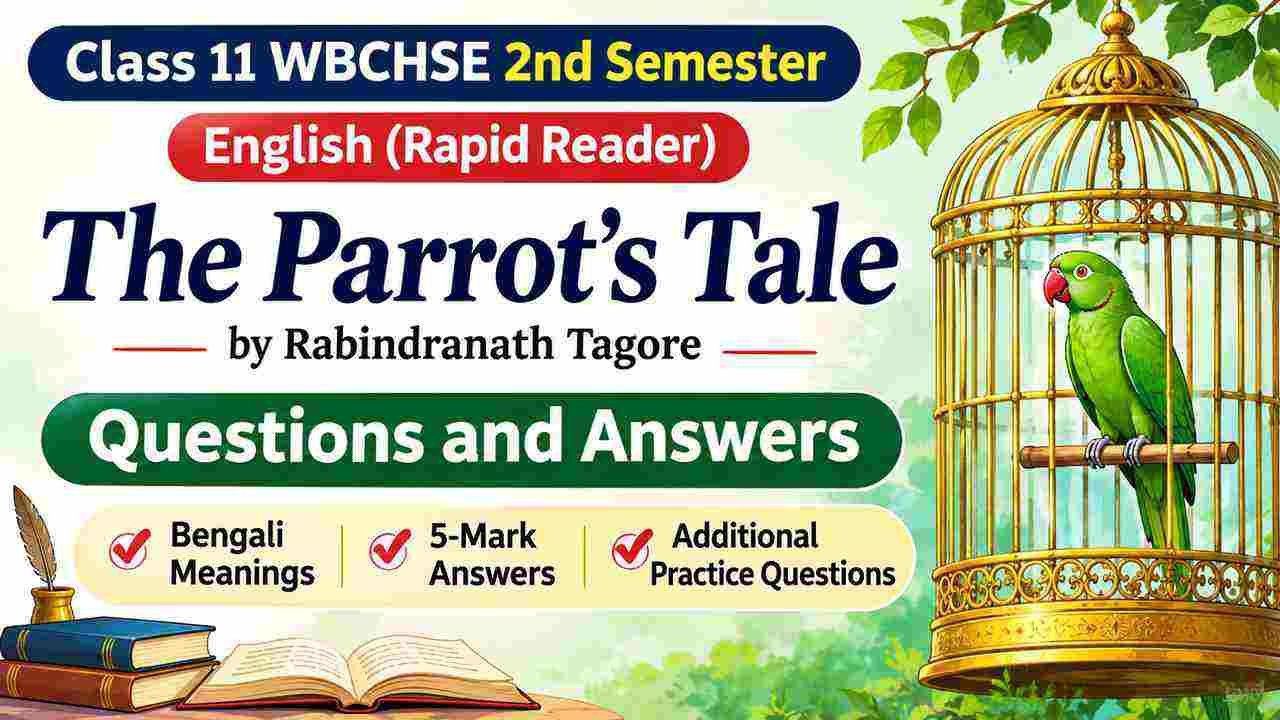
The Parrot’s Tale Questions and Answers for Class 11 WBCHSE 2nd Semester are provided here to help students prepare for their English examination. Written by Rabindranath Tagore, the story satirises an education system that gives more importance to outward show and mechanical learning than to the learner’s actual needs and development.
In this post, I have selected 14 important long-answer questions (5 marks) from the story. The answers are written in simple English, and Bengali meanings are given below them to help students understand the story and prepare their own answers.
I have also added some additional questions for practice. These cover other details and incidents from the story and will help students revise the lesson more thoroughly. These are practice questions only and are not guaranteed to appear in the examination.
For the complete syllabus, marks distribution and chapter-wise study materials for other prescribed lessons, poems, Rapid Reader, grammar and writing skills, visit our Class 11 WBCHSE 2nd Semester English Complete Study Guide.
About the Author: Rabindranath Tagore
Rabindranath Tagore was a famous Bengali poet and writer. He wrote poems, short stories, novels, plays and essays. His writings often deal with human life, nature, society and education. In The Parrot’s Tale, he uses satire and humour to question an education system that ignores the learner’s needs and gives more importance to outward arrangements than to real learning. (রবীন্দ্রনাথ ঠাকুর ছিলেন একজন বিখ্যাত বাঙালি কবি ও সাহিত্যিক। তিনি কবিতা, ছোটগল্প, উপন্যাস, নাটক এবং প্রবন্ধ রচনা করেছেন। তাঁর লেখায় মানুষের জীবন, প্রকৃতি, সমাজ ও শিক্ষার নানা দিক উঠে এসেছে। The Parrot’s Tale গল্পে তিনি ব্যঙ্গ ও হাস্যরসের মাধ্যমে এমন এক শিক্ষাব্যবস্থার সমালোচনা করেছেন, যেখানে শিক্ষার্থীর প্রকৃত প্রয়োজন ও শেখার চেয়ে বাহ্যিক আয়োজনকে বেশি গুরুত্ব দেওয়া হয়।)
About the Story: The Parrot’s Tale
The Parrot’s Tale is a satirical story by Rabindranath Tagore. It tells the story of a parrot whom the King considers foolish because it cannot read the scriptures or follow human etiquette. The King therefore orders his officials to educate the bird. (The Parrot’s Tale রবীন্দ্রনাথ ঠাকুরের একটি ব্যঙ্গধর্মী গল্প। গল্পে এক তোতাপাখির কথা বলা হয়েছে, যাকে রাজা বোকা মনে করেন, কারণ সে ধর্মগ্রন্থ পড়তে পারে না এবং মানুষের মতো ভদ্রতার নিয়মও জানে না। তাই রাজা তাঁর কর্মচারীদের পাখিটিকে শিক্ষিত করার নির্দেশ দেন।)
Instead of understanding the bird’s needs, the officials build a beautiful cage, collect books, copy pages and make elaborate arrangements. The parrot receives neither proper food nor water. Its natural freedom is gradually taken away, and its wings are eventually cut off. The bird finally dies, but the officials declare that its education is complete. (কিন্তু পাখিটির কী প্রয়োজন, তা বোঝার চেষ্টা না করে কর্মচারীরা একটি সুন্দর খাঁচা তৈরি করে, অনেক বই সংগ্রহ করে, বইয়ের পাতা নকল করে এবং নানা আয়োজন করে। পাখিটিকে ঠিকমতো খাবার বা জল দেওয়া হয় না। ধীরে ধীরে তার স্বাভাবিক স্বাধীনতা কেড়ে নেওয়া হয় এবং শেষ পর্যন্ত তার ডানাও কেটে দেওয়া হয়। অবশেষে পাখিটি মারা যায়, অথচ কর্মচারীরা ঘোষণা করে যে তার শিক্ষা সম্পূর্ণ হয়েছে।)
Through this story, Rabindranath Tagore criticises an education system that gives more importance to outward arrangements, memorisation and official success than to the learner’s real development. (এই গল্পের মাধ্যমে রবীন্দ্রনাথ ঠাকুর এমন এক শিক্ষাব্যবস্থার সমালোচনা করেছেন, যেখানে শিক্ষার্থীর প্রকৃত উন্নতির চেয়ে বাহ্যিক আয়োজন, মুখস্থবিদ্যা এবং কর্তৃপক্ষের সাফল্যকে বেশি গুরুত্ব দেওয়া হয়।)
The Parrot’s Tale Questions and Answers: Long-Answer Questions (5 Marks)
The following questions and answers cover important incidents, characters and ideas from the story. Each English answer is followed by its Bengali meaning to help students understand the lesson clearly.
1. Analyse / Discuss / Explain the significance of the title of the short story ‘The Parrot’s Tale’.
(‘The Parrot’s Tale’ গল্পের শিরোনামের তাৎপর্য বিশ্লেষণ / আলোচনা / ব্যাখ্যা করো।)
Ans: ‘The Parrot’s Tale’ is an appropriate title because the parrot is the central figure through whom the whole story unfolds. At first, the bird is free, lively and natural: it sings, flies and jumps. The King, however, considers it foolish because it cannot read the scriptures and has no sense of etiquette. The parrot is then subjected to an elaborate system of education. The golden-looking cage, heaps of copied pages, strict supervision and harsh treatment become more important than the bird itself. The title therefore points not only to the bird’s experience but also to the tragic result of false education. Through this simple tale, Tagore exposes a system that values outward arrangements and official success while neglecting the learner’s life, freedom and real understanding.
(‘The Parrot’s Tale’ নামটি যথার্থ, কারণ তোতাপাখিটিই গল্পের প্রধান চরিত্র এবং তার অভিজ্ঞতার মধ্য দিয়েই পুরো কাহিনি এগিয়েছে। শুরুতে পাখিটি স্বাধীন ও প্রাণবন্ত ছিল। সে গান গাইত, উড়ত এবং লাফাত। কিন্তু রাজা তাকে বোকা মনে করতেন, কারণ সে ধর্মগ্রন্থ পড়তে পারত না এবং ভদ্রতার নিয়ম জানত না। তাই তার ওপর জোর করে এক অদ্ভুত শিক্ষাব্যবস্থা চাপিয়ে দেওয়া হয়। সোনালি খাঁচা, বইয়ের স্তূপ, কড়া পাহারা এবং কঠোর শাস্তি—সবকিছুকে পাখিটির চেয়ে বেশি গুরুত্ব দেওয়া হয়। তাই শিরোনামটি শুধু পাখির জীবনের কথা বলে না, ভুল শিক্ষার করুণ পরিণতিও দেখায়। এই ছোট গল্পের মাধ্যমে টেগোর এমন এক ব্যবস্থার সমালোচনা করেছেন, যেখানে শিক্ষার্থীর জীবন, স্বাধীনতা ও সত্যিকারের বোঝার চেয়ে বাহ্যিক আয়োজন ও লোকদেখানো সাফল্য বেশি গুরুত্বপূর্ণ।)
2. What does the story ‘The Parrot’s Tale’ satirise? What message does Tagore convey through this satire?
(‘The Parrot’s Tale’ গল্পটি কিসের ব্যঙ্গ করে? এই ব্যঙ্গের মাধ্যমে টেগোর কী বার্তা দিয়েছেন?)
Ans: The story satirises an education system that is more interested in show, paperwork and rewards than in the learner’s actual development. The scholars decide that the bird needs a proper cage; the scribes copy books and create a huge mound of pages; and many workers are employed to repair, wash and polish the cage. Each group receives rewards, while nobody cares properly for the parrot. When the King visits, he is impressed by the noise and the arrangements and even forgets to look at the bird. Tagore’s message is that education becomes cruel and meaningless when its methods replace its purpose. Real education should help a learner understand, grow and express life. It should not confine, silence or destroy the very being it is meant to educate.
(গল্পটি এমন এক শিক্ষাব্যবস্থাকে ব্যঙ্গ করে, যেখানে শিক্ষার্থীর সত্যিকারের উন্নতির চেয়ে লোকদেখানো আয়োজন, কাগজপত্র এবং পুরস্কার বেশি গুরুত্বপূর্ণ। পণ্ডিতেরা ঠিক করলেন, পাখির জন্য ভালো খাঁচা দরকার। লেখকেরা বই নকল করে পাতার বিশাল স্তূপ বানালেন। খাঁচা মেরামত, ধোয়া ও পালিশ করার জন্য অনেক লোক নিযুক্ত হলো। প্রত্যেকেই পুরস্কার পেল, কিন্তু পাখিটির ভালো-মন্দ কেউ দেখল না। রাজা শিক্ষা কেন্দ্র দেখতে এসে এত শব্দ ও আয়োজন দেখে মুগ্ধ হলেন, এমনকি পাখিটিকে দেখতেও ভুলে গেলেন। টেগোর বোঝাতে চেয়েছেন, শিক্ষার উদ্দেশ্য ভুলে গিয়ে শুধু পদ্ধতি ও আয়োজনকে গুরুত্ব দিলে শিক্ষা নিষ্ঠুর ও অর্থহীন হয়ে পড়ে। সত্যিকারের শিক্ষা শিক্ষার্থীকে বুঝতে, বেড়ে উঠতে এবং নিজের ক্ষমতা প্রকাশ করতে সাহায্য করবে; তাকে বন্দি, নীরব বা ধ্বংস করবে না।)
3. How does the story criticise rigid, mechanical education systems?
(গল্পটি কীভাবে কঠোর ও যান্ত্রিক শিক্ষাব্যবস্থার সমালোচনা করে?)
Ans: Tagore criticises rigid education through the way the parrot is treated. Instead of observing what the bird needs, the scholars decide that it requires a strong and attractive cage. Scribes copy books until they form a huge heap, and officials spend their time supervising, repairing and polishing the cage. The parrot is fed torn pages with the tip of a pen, while the cage contains no corn or water. When it tries to flap its wings or break the bars, the administrator calls its behaviour audacious and the blacksmith cuts off its wings. The pundits continue their work with a pen and a spear. These events show that the system values obedience and procedure, not understanding or care. The bird’s death exposes the failure of such mechanical education.
(টেগোর তোতাপাখির প্রতি আচরণের মাধ্যমে কঠোর ও যান্ত্রিক শিক্ষাব্যবস্থার সমালোচনা করেছেন। পাখিটির কী প্রয়োজন, তা বোঝার চেষ্টা না করে পণ্ডিতেরা ঠিক করলেন, তার জন্য শক্ত ও সুন্দর খাঁচা দরকার। লেখকেরা বই নকল করে বিশাল স্তূপ তৈরি করলেন। কর্মচারীরা খাঁচা পাহারা, মেরামত ও পালিশ করতেই ব্যস্ত থাকল। পাখিটিকে কলমের ডগা দিয়ে ছেঁড়া কাগজ খাওয়ানো হলো, অথচ খাঁচায় খাবার বা জল ছিল না। সে ডানা ঝাপটালে বা খাঁচার শিক ভাঙতে চাইলে প্রশাসক তাকে দুঃসাহসী বললেন এবং কামার তার ডানা কেটে দিল। পণ্ডিতেরা কলম ও বর্শা নিয়ে আবার পড়ানোর কাজ চালালেন। এসব ঘটনা দেখায়, এই ব্যবস্থা বোঝা ও যত্নের বদলে শুধু বাধ্যতা এবং নিয়মকে গুরুত্ব দেয়। পাখিটির মৃত্যু এই যান্ত্রিক শিক্ষার ব্যর্থতা প্রকাশ করে।)
4. Why did the King want to educate the bird in the story ‘The Parrot’s Tale’?
(‘The Parrot’s Tale’ গল্পে রাজা কেন পাখিটিকে শিক্ষিত করতে চেয়েছিলেন?)
Ans: The King wanted the bird to be educated because he considered it utterly foolish and useless. The parrot could sing songs, fly and jump, but it could not read the scriptures and had no sense of etiquette. The King also complained that birds of this kind ate fruit from the royal orchards and caused a deficit in the royal fruit market. He therefore called his minister and ordered, “Educate it.” His decision was based on his own idea of usefulness and proper behaviour, not on an understanding of the bird’s nature or needs. The command set the whole machinery of forced education in motion. Tagore uses the King’s attitude to expose an authority that judges a learner by fixed standards and ignores its natural abilities, happiness and well-being.
(রাজা পাখিটিকে শিক্ষা দিতে চেয়েছিলেন, কারণ তাঁর চোখে সেটি ছিল একেবারে বোকা ও অকাজের। তোতাপাখিটি গান গাইতে, উড়তে ও লাফাতে পারত, কিন্তু ধর্মগ্রন্থ পড়তে পারত না এবং মানুষের মতো ভদ্রতার নিয়মও জানত না। রাজা আরও অভিযোগ করেছিলেন, এই ধরনের পাখিরা রাজকীয় বাগানের ফল খেয়ে ফেলে এবং রাজ্যের ফলের বাজারে ঘাটতি ঘটায়। তাই তিনি মন্ত্রীকে ডেকে আদেশ দিলেন, “একে শিক্ষিত করো।” তাঁর সিদ্ধান্ত পাখিটির স্বভাব বা প্রয়োজন বোঝার ওপর নির্ভর করেনি; তিনি নিজের ধারণা অনুযায়ী উপযোগিতা ও ভদ্রতাকে বিচার করেছিলেন। এই আদেশ থেকেই জোর করে শিক্ষা দেওয়ার সমস্ত আয়োজন শুরু হয়। রাজার মনোভাবের মাধ্যমে টেগোর এমন কর্তৃত্বের সমালোচনা করেছেন, যা শিক্ষার্থীর স্বাভাবিক ক্ষমতা, আনন্দ ও ভালো থাকার কথা না ভেবে নির্দিষ্ট নিয়মে তাকে বিচার করে।)
5. Who built the golden cage for the bird? Why was it built? What purpose did it serve? What does it symbolise?
(পাখিটির জন্য সোনার খাঁচা কে তৈরি করেছিল? কেন এটি তৈরি করা হয়েছিল? এর কাজ কী ছিল? এটি কীসের প্রতীক?)
Ans: The goldsmith built the bird’s cage after the scholars advised the King that the bird’s tiny nest of chips and twigs could not store much learning. They therefore decided that a cage must be built before teaching began. The cage provided a place in which the bird could be confined and the officials could carry out their educational arrangements. It was so exquisite that people came from far and wide to admire it, and the goldsmith received a bagful of rewards. The text describes the cage as exquisite; calling it a “golden cage” is a common shorthand for its splendour, rather than a precise statement about its material. Symbolically, it represents outward show and confinement. It becomes more important to the authorities than the bird’s food, freedom or actual learning.
(পণ্ডিতদের পরামর্শে স্বর্ণকার পাখিটির খাঁচা তৈরি করেছিলেন। পণ্ডিতদের মতে, খড়কুটো দিয়ে বানানো পাখির ছোট বাসায় বেশি শিক্ষা রাখা সম্ভব নয়। তাই পড়ানো শুরু করার আগে একটি ভালো খাঁচা দরকার। খাঁচাটি পাখিকে বন্দি রাখার এবং কর্মচারীদের শিক্ষার আয়োজন চালানোর জায়গা হয়ে উঠল। খাঁচাটি এত সুন্দর ছিল যে দূরদূরান্ত থেকে লোকেরা তা দেখতে আসত। স্বর্ণকারও এক থলি পুরস্কার পেলেন। পাঠ্যাংশে খাঁচাটিকে খুব সুন্দর বা চমৎকার বলা হয়েছে; “সোনার খাঁচা” কথাটি তার জাঁকজমক বোঝানোর প্রচলিত সংক্ষিপ্ত রূপ, খাঁচাটি সত্যিই সোনা দিয়ে তৈরি ছিল—এ কথা পাঠ্যাংশে স্পষ্ট বলা নেই। প্রতীকী অর্থে খাঁচাটি বাহ্যিক চাকচিক্য ও বন্দিত্বের চিহ্ন। কর্তৃপক্ষের কাছে এটি পাখির খাবার, স্বাধীনতা ও সত্যিকারের শিক্ষার চেয়েও বেশি গুরুত্বপূর্ণ হয়ে ওঠে।)
6. How does the parrot die? What does it symbolise?
(তোতাপাখিটি কীভাবে মারা যায়? এর মৃত্যু কীসের প্রতীক?)
Ans: The parrot gradually becomes half-dead because the education centre gives it no corn or water and forces torn pages into its mouth with the tip of a pen. Its natural efforts to look at the morning sun, flap its wings and break the cage rods are treated as bad behaviour. The administrator calls this audacity, and the blacksmith cuts off the bird’s wings. The pundits then continue their work with a pen in one hand and a spear in the other. The bird finally dies, though nobody knows the exact moment. Its death symbolises the destruction of life, freedom and natural ability by a cruel system that claims to educate. Tagore shows that knowledge cannot be forced into a learner through hunger, confinement, violence and meaningless procedures.
(শিক্ষাকেন্দ্রে পাখিটিকে ভুট্টা বা জল দেওয়া হতো না। তার মুখে কলমের ডগা দিয়ে জোর করে ছেঁড়া বইয়ের পাতা ঢোকানো হতো। তাই পাখিটি ধীরে ধীরে অর্ধমৃত হয়ে পড়ে। সে সকালের সূর্যের দিকে তাকাতে, ডানা ঝাপটাতে বা খাঁচার শিক ভাঙতে চাইলে সেগুলিকে খারাপ আচরণ বলা হয়। প্রশাসক একে দুঃসাহস বলেন এবং কামার পাখিটির ডানা কেটে দেয়। এরপর পণ্ডিতেরা এক হাতে কলম ও অন্য হাতে বর্শা নিয়ে পড়ানোর কাজ চালিয়ে যান। শেষ পর্যন্ত পাখিটি মারা যায়, যদিও ঠিক কখন তার মৃত্যু হয়েছিল কেউ জানত না। পাখিটির মৃত্যু এমন নিষ্ঠুর শিক্ষাব্যবস্থার হাতে জীবন, স্বাধীনতা ও স্বাভাবিক ক্ষমতার ধ্বংসের প্রতীক। টেগোর দেখিয়েছেন, না খাইয়ে, বন্দি রেখে, মারধর করে এবং অর্থহীন নিয়ম চাপিয়ে কাউকে সত্যিকারের জ্ঞানী করা যায় না।)
7. Describe in brief the process of educating the bird.
(পাখিটিকে শিক্ষিত করার প্রক্রিয়াটি সংক্ষেপে বর্ণনা করো।)
Ans: The King orders his minister to educate the parrot and gives the task to his nephew. Scholars discuss the bird’s foolishness and decide that its small nest cannot hold enough learning, so a cage must be built. A goldsmith makes a cage. A pundit asks for books, and scribes copy them repeatedly until they form a huge mound of pages. The officials supervise, wash, repair and polish the cage, while many workers receive rewards. The bird is fed torn pages with a pen tip, not proper food. When it flaps its wings and tries to break the bars, the blacksmith cuts off its wings. The pundits continue with a pen and a spear. The bird grows weak and dies, showing that the process destroys rather than educates it.
(রাজা মন্ত্রীকে তোতাপাখিকে শিক্ষিত করার আদেশ দেন এবং কাজটি তাঁর ভাইপোকে দেন। পণ্ডিতেরা পাখির বোকামি নিয়ে আলোচনা করে সিদ্ধান্ত নেন, তার ছোট বাসায় বেশি শিক্ষা রাখা যাবে না; তাই একটি খাঁচা বানাতে হবে। স্বর্ণকার একটি জাঁকজমকপূর্ণ খাঁচা তৈরি করেন। পণ্ডিত বই চান, আর লেখকেরা বারবার নকল করে পাতার বিশাল স্তূপ বানান। কর্মচারীরা খাঁচা পাহারা দেয়, ধোয়, মেরামত ও পালিশ করে; অনেক কর্মচারী পুরস্কার পায়। পাখিকে ভালো খাবার না দিয়ে কলমের ডগা দিয়ে ছেঁড়া কাগজ খাওয়ানো হয়। সে ডানা ঝাপটালে ও শিক ভাঙতে চাইলে কামার তার ডানা কেটে দেয়। পণ্ডিতেরা এক হাতে কলম ও অন্য হাতে বর্শা নিয়ে পড়ানোর কাজ চালায়। পাখিটি দুর্বল হয়ে মারা যায়। এতে বোঝা যায়, এই প্রক্রিয়া তাকে শিক্ষিত না করে ধ্বংস করেছে।)
8. ‘…the bird’s education is now complete.’ — Who said this to whom? How did the speaker conclude that it was complete? Was it truly complete?
(“… the bird’s education is now complete.” — কথাটি কে, কাকে বলেছিল? বক্তা কীভাবে বুঝেছিল যে শিক্ষা সম্পূর্ণ হয়েছে? সত্যিই কি শিক্ষা সম্পূর্ণ হয়েছিল?)
Ans: The King’s nephew said, “Your Majesty, the bird’s education is now complete,” when the King asked what had happened to it. The nephew judged the education complete because the prescribed arrangements had been carried out: the cage had been built, books had been copied, pages had been stuffed into the bird’s mouth, its wings had been cut and officials had supervised the process. The King then asked whether the bird still jumped, flew, sang or screamed when hungry. The answer to every question was “No.” These replies did not prove learning; they showed that the bird had lost its natural powers. When brought before the King, it could not speak. Thus, the education was not truly complete. The statement is deeply ironic because the system calls the bird’s destruction success.
(রাজা পাখিটির কী অবস্থা হয়েছে জানতে চাইলে তাঁর ভাইপো বলেন, “মহারাজ, পাখিটির শিক্ষা সম্পূর্ণ হয়েছে।” ভাইপো মনে করেছিলেন শিক্ষা সম্পূর্ণ, কারণ সব আয়োজন করা হয়েছে: খাঁচা বানানো হয়েছে, বই নকল হয়েছে, পাখির মুখে কাগজ ঢোকানো হয়েছে, তার ডানা কাটা হয়েছে এবং কর্মচারীরা সব কাজ দেখাশোনা করেছে। এরপর রাজা জানতে চান, পাখিটি এখনও লাফায় কি না, উড়তে পারে কি না, গান গায় কি না, বা খাবার না পেলে চিৎকার করে কি না। প্রতিটি প্রশ্নের উত্তর ছিল “না”। এসব উত্তর শিক্ষার প্রমাণ ছিল না; বরং পাখিটির স্বাভাবিক ক্ষমতা নষ্ট হয়ে যাওয়ার প্রমাণ ছিল। রাজা সামনে আনা হলে পাখিটি কথা বলতে পারেনি। তাই তার শিক্ষা সত্যিই সম্পূর্ণ হয়নি। এই কথার মধ্যে গভীর ব্যঙ্গ আছে, কারণ ব্যবস্থাটি পাখির ধ্বংসকেই সাফল্য বলে মনে করেছে।)
9. Why did the King decide to visit the education centre? Describe the day when he visited it.
(রাজা কেন শিক্ষাকেন্দ্র দেখতে যাওয়ার সিদ্ধান্ত নিয়েছিলেন? তাঁর যাওয়ার দিনের ঘটনাটি বর্ণনা করো।)
Ans: The King decided to visit the education centre because he wanted to see for himself the rapid progress of the bird’s education. He arrived with a large group of friends, companions and courtiers. As soon as he reached the entrance, a loud chorus of bells, drums, harps, flutes and many other instruments began. The pundits chanted hymns loudly, while repairmen, labourers, the goldsmith, scribes, supervisors and relatives greeted him with great noise. The nephew asked what he thought, and the King praised the sound and the arrangements. The nephew pointed out that a great deal of money had also gone into the show. The King was pleased and almost left without seeing the bird. Only a fault-finder reminded him. The visit exposes the King’s attention to spectacle rather than learning.
(পাখিটির শিক্ষা কত দ্রুত এগোচ্ছে, তা নিজের চোখে দেখার জন্য রাজা শিক্ষাকেন্দ্রে যাওয়ার সিদ্ধান্ত নেন। তিনি বন্ধু, সঙ্গী ও সভাসদদের নিয়ে সেখানে পৌঁছান। প্রবেশদ্বারে পৌঁছাতেই ঘণ্টা, ঢাক, হার্প, বাঁশি এবং আরও নানা বাদ্যযন্ত্রের জোরে শব্দ শুরু হয়। পণ্ডিতেরা উচ্চস্বরে স্তোত্র পাঠ করেন। মেরামতকারী, শ্রমিক, স্বর্ণকার, লেখক, তত্ত্বাবধায়ক ও আত্মীয়েরা হৈচৈ করে রাজাকে অভ্যর্থনা জানায়। ভাইপো রাজাকে জিজ্ঞেস করেন, তাঁর কেমন লাগছে। রাজা শব্দ ও আয়োজনের প্রশংসা করেন। ভাইপো বলেন, এই আয়োজনের পেছনে অনেক টাকাও খরচ হয়েছে। রাজা খুব খুশি হয়ে পাখিটিকে না দেখেই প্রায় ফিরে যাচ্ছিলেন। তখন এক সমালোচক তাঁকে পাখিটির কথা মনে করিয়ে দেন। এই ঘটনায় বোঝা যায়, রাজা সত্যিকারের শিক্ষার চেয়ে জাঁকজমক ও প্রদর্শনেই বেশি মুগ্ধ হয়েছিলেন।)
10. “What audacity!” — Who said this about whom? What was the audacity? What steps were taken to stop it?
(“What audacity!” — কে, কাকে উদ্দেশ করে কথাটি বলেছিল? দুঃসাহসটি কী ছিল? তা বন্ধ করতে কী ব্যবস্থা নেওয়া হয়েছিল?)
Ans: The administrator said “What audacity!” about the parrot. Although it had become weak, the bird still looked at the morning sun, flapped its wings and sometimes tried to break the cage bars with its sickly beak. These natural actions were treated as objectionable behaviour by the authorities. The administrator called them audacity, as if the bird had no right to resist its confinement. Immediately, the blacksmith came with bellows, fire, a hammer and chisels. An iron chain was made, and the bird’s wings were cut off. The King’s relatives then called the birds stupid and ungrateful. The pundits continued the so-called education with a pen in one hand and a spear in the other. These actions show how the system punished natural freedom instead of caring for the learner.
(প্রশাসক তোতাপাখিকে লক্ষ্য করে “কী দুঃসাহস!” কথাটি বলেছিলেন। পাখিটি দুর্বল হয়ে পড়লেও এখনও সকালের সূর্যের দিকে তাকাত, ডানা ঝাপটাত এবং কখনও কখনও অসুস্থ ঠোঁট দিয়ে খাঁচার শিক ভাঙার চেষ্টা করত। কর্তৃপক্ষ পাখির এই স্বাভাবিক কাজগুলিকেই আপত্তিকর আচরণ বলে মনে করেছিল। প্রশাসক একে দুঃসাহস বলেন, যেন পাখিটির বন্দিত্বের বিরুদ্ধে প্রতিবাদ করার অধিকার নেই। সঙ্গে সঙ্গে কামার হাপর, আগুন, হাতুড়ি ও ছেনি নিয়ে আসে। একটি লোহার শিকল তৈরি করা হয় এবং পাখিটির ডানা কেটে ফেলা হয়। রাজার আত্মীয়েরা তখন পাখিদের বোকা ও অকৃতজ্ঞ বলে মন্তব্য করেন। পণ্ডিতেরা এক হাতে কলম ও অন্য হাতে বর্শা নিয়ে তথাকথিত শিক্ষা চালিয়ে যান। এসব কাজ দেখায়, ব্যবস্থাটি শিক্ষার্থীর যত্ন না নিয়ে তার স্বাভাবিক স্বাধীনতাকেই শাস্তি দিয়েছিল।)
11. What does the mention of nature at the end of the story symbolise? Why did Tagore personify nature at the end of ‘The Parrot’s Tale’?
(গল্পের শেষে প্রকৃতির উল্লেখ কীসের প্রতীক? ‘The Parrot’s Tale’ গল্পের শেষে টেগোর প্রকৃতিকে মানুষের মতো করে দেখিয়েছেন কেন?)
Ans: At the end of the story, the gentle south wind, blossoming woods and young green leaves present a picture of spring and living nature. This lively outdoor world contrasts with the parrot, which lies lifeless after being confined and mistreated in the cage. The leaves seem to fill the sky with a deep and heavy sigh. By giving nature this human-like expression, Tagore makes it appear to share sorrow over the bird’s fate. The ending suggests that life and renewal continue outside the artificial educational centre, while the system inside has destroyed a living creature. Nature’s sigh may therefore be read as silent sorrow and protest. It reminds readers that education should remain close to freedom, growth and life, not become a lifeless arrangement of cages, books and force.
(গল্পের শেষে কোমল দক্ষিণা বাতাস, ফুলে ভরা বন এবং কচি সবুজ পাতার মাধ্যমে বসন্ত ও জীবন্ত প্রকৃতির ছবি ফুটে উঠেছে। এই প্রাণবন্ত বাইরের জগতের সঙ্গে খাঁচার মধ্যে বন্দি ও অত্যাচারিত হয়ে মারা যাওয়া তোতাপাখির তীব্র বৈপরীত্য রয়েছে। সবুজ পাতাগুলি যেন আকাশে গভীর ও ভারী দীর্ঘশ্বাস ছড়িয়ে দেয়। প্রকৃতিকে মানুষের মতো দীর্ঘশ্বাস ফেলতে দেখিয়ে টেগোর তাকে পাখিটির মৃত্যুর দুঃখের অংশীদার করেছেন। এই সমাপ্তি বোঝায়, কৃত্রিম শিক্ষাকেন্দ্রের বাইরে জীবন ও নতুন করে বেড়ে ওঠা চলতে থাকে, অথচ ভেতরের ব্যবস্থা একটি জীবন্ত প্রাণকে ধ্বংস করেছে। প্রকৃতির দীর্ঘশ্বাসকে নীরব শোক ও প্রতিবাদ হিসেবে বোঝা যায়। এটি মনে করিয়ে দেয়, শিক্ষা স্বাধীনতা, বিকাশ ও জীবনের সঙ্গে যুক্ত থাকা উচিত; খাঁচা, বই ও জোরজবরদস্তির নিষ্প্রাণ ব্যবস্থায় পরিণত হওয়া উচিত নয়।)
12. How does Tagore use irony in ‘The Parrot’s Tale’ to convey his criticism?
(‘The Parrot’s Tale’ গল্পে টেগোর কীভাবে ব্যঙ্গ ব্যবহার করে তাঁর সমালোচনার কথা বলেছেন?)
Ans: Tagore uses irony by repeatedly showing a difference between what the officials claim and what actually happens to the parrot. A cage is presented as necessary for learning, and people admire it. The scribes produce a huge mound of copied pages, and the workers polish and repair the cage; all receive rewards. The King admires the loud welcome and spending, but forgets to look at the bird. When he finally sees it, there is no food or water, and pages are being stuffed into its mouth. The nephew later calls the education complete because the bird no longer moves or sings. This is bitterly ironic: the system celebrates the destruction of its learner as success. Through this contrast, Tagore exposes false measures of progress.
(কর্মচারীরা যা বলে এবং পাখিটির সঙ্গে বাস্তবে যা ঘটে, তার মধ্যে বারবার পার্থক্য দেখিয়ে টেগোর ব্যঙ্গ সৃষ্টি করেছেন। পণ্ডিতেরা বলেন, শিক্ষার জন্য খাঁচা দরকার; লোকেরা সেই খাঁচাকেই শিক্ষার নিদর্শন মনে করে প্রশংসা করে। লেখকেরা নকল করা পাতার বিশাল স্তূপ তৈরি করেন, আর শ্রমিকেরা খাঁচা পালিশ ও মেরামত করে; সবাই পুরস্কার পায়। রাজা জাঁকজমকপূর্ণ অভ্যর্থনা ও খরচের পরিমাণ দেখে মুগ্ধ হন, কিন্তু পাখিটিকে দেখতে ভুলে যান। শেষে পাখিটিকে দেখে বোঝা যায়, খাঁচায় খাবার বা জল নেই, বরং তার মুখে কাগজ ঢোকানো হচ্ছে। পরে ভাইপো পাখিটি আর নড়ে না বা গান গায় না বলে তার শিক্ষা সম্পূর্ণ ঘোষণা করে। এটাই তীব্র ব্যঙ্গ: শিক্ষার্থীকে ধ্বংস করাকেই ব্যবস্থা সাফল্য বলে উদ্যাপন করে। এই বৈপরীত্যের মাধ্যমে টেগোর মিথ্যা উন্নতির ধারণাকে প্রকাশ করেছেন।)
13. How is Tagore’s ‘The Parrot’s Tale’ relevant to the modern education system? Justify it as a timeless and universal story.
(টেগোরের ‘The Parrot’s Tale’ আধুনিক শিক্ষাব্যবস্থার ক্ষেত্রে কীভাবে প্রাসঙ্গিক? একে চিরকালীন ও সর্বজনীন গল্প হিসেবে প্রতিষ্ঠা করো।)
Ans: Although the story does not describe a modern school, its message can be applied to education in any age. The parrot is judged by narrow standards and forced to accept methods that do not suit its nature. The officials care more about books, records, supervision and rewards than about the learner’s needs. Similar problems arise whenever students are made to memorise without understanding, are denied curiosity and creativity, or are judged only by marks and outward performance. The story is timeless because it asks a basic question: does education help the learner grow, or does it merely make the system look successful? Tagore’s parable reminds teachers, parents and authorities to provide understanding, care and freedom. Its warning is universal because every society must protect the life and individuality of learners.
(গল্পটি সরাসরি আধুনিক বিদ্যালয়ের কথা না বললেও এর বক্তব্য সব যুগের শিক্ষাব্যবস্থার ক্ষেত্রে প্রযোজ্য। তোতাপাখিকে খুব সংকীর্ণ মানদণ্ডে বিচার করা হয় এবং তার স্বভাবের সঙ্গে না-মেলা পদ্ধতি জোর করে চাপিয়ে দেওয়া হয়। কর্মচারীরা শিক্ষার্থীর প্রয়োজনের চেয়ে বই, নথি, পাহারা ও পুরস্কারকে বেশি গুরুত্ব দেয়। আজও যখন শিক্ষার্থীদের না বুঝে মুখস্থ করতে বাধ্য করা হয়, কৌতূহল ও সৃজনশীলতার সুযোগ দেওয়া হয় না, অথবা শুধু নম্বর ও বাহ্যিক ফল দিয়ে বিচার করা হয়, তখন একই সমস্যা দেখা দেয়। গল্পটি চিরকালীন, কারণ এটি একটি মৌলিক প্রশ্ন তোলে: শিক্ষা কি শিক্ষার্থীকে বড় হতে সাহায্য করে, নাকি শুধু ব্যবস্থাটিকে সফল দেখায়? টেগোরের গল্প শিক্ষক, অভিভাবক ও কর্তৃপক্ষকে বোঝাপড়া, যত্ন ও স্বাধীনতা দেওয়ার কথা মনে করিয়ে দেয়। প্রতিটি সমাজেরই শিক্ষার্থীর জীবন ও স্বকীয়তা রক্ষা করা দরকার।)
14. Discuss the message or moral conveyed through ‘The Parrot’s Tale’.
(‘The Parrot’s Tale’ গল্পের বার্তা বা নীতিশিক্ষা আলোচনা করো।)
Ans: The story teaches that education should help a learner develop naturally and should never destroy the learner in the name of improvement. The parrot’s life is taken over by officials who value a beautiful cage, copied pages, constant supervision and public praise. The bird is not given proper food or water, and its attempts to fly are punished. Meanwhile, the scholars, goldsmith, scribes, blacksmith and administrator receive rewards or honours. The King is satisfied with the arrangements until he finally sees the silent bird. Tagore’s moral is that real education cannot be measured by the number of books, the size of an institution or the success of its officials. It must be judged by understanding, growth, freedom and well-being. Teaching should awaken the learner’s abilities, not silence them through force.
(গল্পটির শিক্ষা হলো, শিক্ষার উদ্দেশ্য শিক্ষার্থীকে স্বাভাবিকভাবে বিকশিত হতে সাহায্য করা; উন্নতির নামে তাকে ধ্বংস করা নয়। তোতাপাখির জীবন এমন কর্মচারীদের হাতে পড়ে, যারা সুন্দর খাঁচা, নকল করা বইয়ের পাতা, সারাক্ষণের পাহারা এবং লোকের প্রশংসাকে বেশি গুরুত্ব দেয়। পাখিটিকে ঠিকমতো খাবার বা জল দেওয়া হয় না, আর উড়তে চাইলে শাস্তি দেওয়া হয়। এদিকে পণ্ডিত, স্বর্ণকার, লেখক, কামার ও প্রশাসক পুরস্কার বা সম্মান পায়। রাজা আয়োজন দেখে সন্তুষ্ট থাকেন, যতক্ষণ না তিনি শেষ পর্যন্ত নীরব পাখিটিকে দেখেন। টেগোরের শিক্ষা হলো, বইয়ের সংখ্যা, প্রতিষ্ঠানের আকার বা কর্মচারীদের সাফল্য দিয়ে সত্যিকারের শিক্ষা মাপা যায় না। শিক্ষা বিচার করতে হবে বোঝাপড়া, বিকাশ, স্বাধীনতা ও ভালো থাকার মাধ্যমে। শিক্ষাদান শিক্ষার্থীর ক্ষমতাকে জাগিয়ে তুলবে, জোর করে তাকে চুপ করিয়ে দেবে না।)
Additional Questions on The Parrot’s Tale for Practice
The following questions cover some other important details, incidents and aspects of the story. They are provided for additional practice and revision. These are practice questions only and are not guaranteed to appear in the examination.
Additional 5-Mark Questions for Practice
- What discussions did the scholars hold about the parrot? What conclusion did they reach about its tiny nest?
- Describe how the golden-looking cage was built and how people reacted when they saw it.
- How did the scribes prepare the study materials for the parrot’s education? How were they rewarded for their work?
- Describe the work of the officials and workers who were employed to supervise, wash, repair and polish the parrot’s cage. How did they benefit from these arrangements?
- Who were the fault-finders? What criticism did they make about the education centre, and how did the King’s nephew respond?
- Describe the grand arrangements made to welcome the King during his visit to the education centre. How did he react to them?
- Why was the King about to leave the education centre without seeing the parrot? Who reminded him about the bird, and what happened afterwards?
- Describe what the King discovered when he finally examined the parrot. What did he hear when he touched the bird, and what does this reveal about its condition?
How to Prepare The Parrot’s Tale for the Examination
Students should read the story carefully and understand its main events before learning the answers. Pay special attention to the parrot, the King, the King’s nephew, the scholars and the other officials involved in the process of educating the bird.
Try to understand the significance of the cage, the copied pages, the treatment of the bird and its final death. These incidents will help you understand the central idea and the criticism of mechanical education in the story.
Practise writing the long answers in simple English. Read the Bengali meanings whenever you find an answer difficult to understand. You can also try the additional practice questions to revise other details from the story.
Class 11 English Suggestion – 2nd Semester 2027 (WBCHSE)
Students preparing for the WBCHSE Class 11 Second Semester English examination can explore our complete English Suggestion PDF for 2027. It includes 15 Sample Question Paper Sets with Complete Answers, covering Prose, Verse, Rapid Reader Questions Answers with Bengali meanings, Non-Textual Grammar and Writing Skills.
Conclusion
I hope these questions and answers, along with their Bengali meanings, will help students understand The Parrot’s Tale and prepare for their Class 11 WBCHSE 2nd Semester English examination. Read the answers carefully and practise writing them regularly.